Tuesday, September 7, 2021

Prominent categories of On-demand Applications!

In today’s era of digitalization, consumers are accustomed to receiving instant solutions to anything and everything at their fingertips. This customer expectation is perfectly fulfilled by On-demand app solutions. As the name indicates, on-demand apps enable customers to receive services/ products at their desired location as and when they demand; with just a few clicks on the smartphones.

Such services are immensely advantageous to customers and providers owing to the following reasons:

  • Instant access to smart search, suitable payment methodologies, and real-time tracking
  • Prompt delivery leading to customer satisfaction
  • A budget-friendly option for consumers and providers unanimously
  • Higher revenue generation for businesses and scope for scaling up their operations

No wonder such apps have gained a lot of traction within a short period and are predicted to rule the roost in the coming years.

On-demand app development possesses a huge market potential and has a lot to offer to aspiring entrepreneurs. So, this write-up outlines the various on-demand app models as well as the major app categories that have disrupted the mobile app industry. A quick read will provide useful insights to businesses that plan to invest in on-demand app creation.

On-demand App: Business Models

B2B: Business to Business

This business model is used when a business seeks services or products from another business enterprise. B2B apps connect various businesses via mobile platforms and support transactions across the globe. B2B apps are categorized into two segments: Vertical and Horizontal. “Vertical” refers to serving a single industrial domain whereas “Horizontal” refers to serving manifold industrial sectors. Some of the prominent B2B apps include Cargomatic, Catalant, Eventio, Flipkart, Amazon, UrbanClap, and Walmart.

B2C: Business to Consumer

The app solutions catering to this business model help a business to digitally connect to their customers. B2C solutions enable the end-users to either buy products or avail of services directly from a business enterprise. Dominos, Starbucks, Amway, Nike, are some notable examples of this model.

C2C: Consumer to Consumer

C2C apps allow users to sell or buy goods/services from other users. Such apps provide equal rights to all the users and none of them are regarded as entrepreneurs. For example, the BlaBlaCar app enables users to fetch as well as offer rides to co-travelers. These platforms provide ride details like arrival/departure points and travel dates - to persons who wish to book a seat. Other popular C2C app solutions are AirBnB, OLX, Uber, eBay, etc.

Major Types of On-demand Apps

Grocery

Grocery delivery services via on-demand mobile apps are currently one of the most preferred and widely used services. This is because such apps eliminate the need for paying a visit to the grocery store and waiting in long queues, for buying daily necessities. Consumers simply have to tap on their mobile handsets to select the necessary items, add them into the cart, make the payment using secure in-app options, and the groceries reach your doorstep within a few hours.

Food Delivery

Food delivery apps allow consumers to effortlessly taste different delicacies from a wide range of eateries right from the comfort of their living rooms. Such an application displays all available food joints within the users’ vicinity. The users can then select the restaurant/s of their choice, the food items they wish to order as well as the desired customization details. Once the payment is executed, the eatery confirms the order and provides home delivery. These apps operate within a particular radius and levy delivery charges based on the bulkiness of the order. Besides, such apps fetch more orders for food providers and help them to widen their customer base.  Uber Eats, Grubhub, Doordash, and Instacart are some examples of successful food delivery apps.

Healthcare

On-demand medical apps elevate the convenience quotient by instantly connecting patients with practitioners and providing round-the-clock services. mHealth apps like doc-on-demand, not only enables patients to book doctor appointments via smartphone devices but also provide an in-person-like online healthcare consultation experience, including medical examinations as well as recommendations from physicians. Apart from telemedicine apps, the healthcare on-demand sector also offers medicine delivery services those drop-ship medicines directly to the customers’ doorstep. PharmEasy NowRx, Practo, 1mg, and Myra are some noteworthy examples.

Home Services

Finding reliable home services for tasks such as plumbing, electrical issues, pest control, furniture repair, house cleaning, etc. has always been a difficult task as such services aren’t easily available. However, the advent of home services apps have successfully addressed this pain area encountered by consumers and has benefitted providers too. Individuals, as well as commercial service providers, enroll themselves in this marketplace for generating leads. Furthermore, the app provides the location of the home/office seeking services, tracking options, and review features to facilitate service delivery. TaskRabbit, Homejoy, Handy, Slate, UrbanClap, and Merry Maids are some popular examples of this niche.

Entertainment

Entertainment apps like Amazon Prime, Spotify, and Netflix, complement the changing behavior of the consumers of the entertainment industry. Thanks to such apps, viewers can now watch movies/shows, listen to music, on these OTT platforms, and indulge in gaming sessions regardless of the hour and location. Furthermore, one can tune in to programs broadcasted from any corner of the world and watch an entire season at one go instead of having to wait for the next episode. As such, this approach proves to be convenient and offers value for money.

Employment services

The modern job industry is teeming with professionals who prefer flexible/freelancing jobs over the conventional company culture and are interested in short-duration projects. Such job seekers use on-demand employment apps to connect to the providers and find the specific type of job offers they are looking for.

Travel

On-demand travel apps have become a handy travel companion for all new-age travelers. This is because such apps have simplified complex tasks like finding and locating tourist spots, booking hotels, renting car services, etc. Travelers utilize applications such as HotelToday, and Airbnb to acquire information and avail of essential services using their smartphones.

Cab Booking Services

Taxi-booking apps like Uber, Flywheel Taxi, Juno, Lyft, etc. come with the following offerings:

  • Booking a ride by providing the pick-up location and the desired destination.
  • Tracking the driver’s location through GPS-enabled maps/navigators
  • Interaction with the driver using in-app communication channels to enquire about the arrival time, while awaiting the cab’s arrival.
  • Feedback systems concerning behavior and services via ratings, for both customers and drivers.

Transportation and Logistics

Apps like Uber Freight and UberDELIVER allow the safe delivery of parcels and the transportation of freights to any location, at any time. Such solutions come with advanced features such as real-time tracking, speedy payment, in-app messaging to facilitate communication between customers and suppliers and offer transparent pricing.

Concluding Thoughts:

On-demand apps empower customers to obtain access to their necessities at their fingertips and hence have garnered unparalleled popularity amongst the masses across the globe. Therefore, investing in on-demand app development will make way for a quantum leap in terms of business growth as well as profitability.

 If you have architected a fully functional on-demand app, do not forget to share your experiences in the comments section below.

Guidance on building a Productive Medical Mobile Application!

The demand curve for medical mobile apps continues to soar as smartphone apps are the most preferred tools for obtaining any product or service. The healthcare app users enjoy the following advantages:

  • Scheduling/postponing/canceling appointments, selecting the doctor/specialist of their choice, and receiving emergency help instantly
  • Receiving reminders/updates related to prescription refills and appointments via notifications
  • Accessing electronic therapeutic records and lab test outcomes
  • Tracking health parameters such as blood glucose levels, cholesterol, height, weight, etc.
  • Downloading as well as transferring medical reports like X-ray/ultrasound scans, MRI reports, etc.

Every medical service provider would like to offer the afore-mentioned facilities to their patients for expanding their customer base and retaining the existing ones. As a result, Healthcare providers are hiring Healthcare app development services to build On-demand medical mobile apps. Therefore, I have penned down certain crucial aspects that providers need to comprehend before jump-starting the app development process. A quick read will prove helpful to healthcare app owners in deciding the right roadmap.

Medical mobile app development: Best Practices

Identify the shortcomings of the existing medical apps

Despite the growing demand for healthcare apps, several apps fail to satisfy customer expectations. So, before you go ahead to architect one, identify the areas where other applications have failed. Some of the commonest shortcomings of current medical apps are as follows:

  • A structure that fails to address any specific problem
  • Confusing UI, below-average UX, and poor usability
  • The lack of clinical output
  • The inability to adhere to regulatory compliances and practices to ensure privacy and security of data.

Once you sum up the drawbacks in existing apps; build solutions that are meaningful, dependable, and helpful. Your app must also comply with the privacy and security mandates; as this is one of the most crucial aspects considered by patients and providers before adopting a healthcare app.

Know your audience and design Consumer-driven apps

Conduct surveys to learn about the preferences of your target audience to effectively engage consumers across different demographic groups. Some general observations are:

  • Elderly users prefer larger icons/letters and simpler directions and navigation methods
  • Youngsters are more attracted to medical apps with colorful displays, gaming technology, social media integration, etc.
  • Some demographic groups prefer in-app quizzes and contests relating to wellness and healthcare.

Designing your app as per the preferences of your targeted consumers will accelerate the adoption rate.

Select the kind of e-health app that befits your Idea

There are myriad lucrative functions to include in your medical app such as diagnosis chatbots, phone-to-text abilities, mobile medication alert functionality, geo-location/geofencing, etc. So, it’s important to understand where your app idea fits into the electronic health space and then decide on the type of healthcare app accordingly.  Your target app should be fulfilling the needs of one niche in the e-health domain. Here are the major types of healthcare apps to choose from.

Clinical assistance apps help doctors to provide electronic in-hospital diagnoses like symptoms checkers, digital images, laboratory results, etc. And, if this functionality is broadened and patients’ medical data is systemized, EMR and EHR apps come into the picture. The EMR (Electronic Medical Records) software, stores the treatment history of patients; while the EHR (Electronic Health Records) software, allows healthcare providers to securely exchange medical information.

Scheduling and reminder apps assist administrators and practitioners in scheduling future appointments promptly and also send timely reminders to patients concerning scheduled appointments as well as prescription pick-ups whenever required.

Telehealth/Remote Monitoring apps enable the remote transmission of patient-related information to a healthcare provider based in a different location. Doctors can even relay information pertaining to ECG viewing, patient lifescan data, and remote oxygen-level checks in between connected devices.

Healthcare Resource and Training Apps are meant for healthcare practitioners, nurses, and learning physicians. Such apps offer valuable assistance on diseases, drugs, and treatment methodologies; in the form of study guides, clinical references, drug-related information, educational courses/ games, etc.

Fitness and Lifestyle apps are for personal use and are meant for individuals looking for app solutions to track and maintain their personal health and fitness. Apps concerning diet guidance, fitness tracking, meditation, motivation, etc. are some of the commonest examples of this category.

Medical Emergency apps aim at saving lives during emergencies. When the help button is pressed, a direct call to the hospital is activated and the patients’ location is identified.

Design a user-friendly UI/UX

A flawlessly designed UI and UX are essential prerequisites in medical apps. This is because modern-day devices have relatively smaller screens and so it becomes challenging for medical app developers to conveniently present digital content for users. Check out some of the best prevalent practices.

  • Let the user commence the app experience with crucial information like profile viewing, advanced search, appointment scheduling, etc.
  • Provide important information in the early stages of the users’ journey through your app.
  • Keep the graphic design clean, simple, and uncomplicated.
  • Create rational and consistent user stories/pathways.
  • Choose user interactions with care so that the number of interactions is minimal and the consumers’ objective is achieved as well.
  • Try to deliver an overall seamless in-app experience so that your app turns out to be convenient as well as time-saving for users.

Pick the targeted Devices and Platforms wisely

One question that arises in the minds of every app owner is; “Which platforms, devices, and OS should my e-health app support?” Well, e-health apps needs to be supported on the right devices and platforms. Check out some crucial facts.

Devices

  • Using mobile devices like Smartphones, smartwatches, and tablets; users can access your app instantly and speedily.
  • Desktop devices, like PCs and desktops, will prove beneficial for elderly users and those conducting in-depth or time-intensive research.

Platforms

  • Developing apps in both Android and iOS will allow you to reach the maximum audience.
  • A single OS can be targeted, if you have already scrutinized the existing analytics and figured out which platform is preferred by your target audience.

Research on what Functionalities to add based on the App’s Type

It’s important to research what kind of feature your app needs based on the type of healthcare app niche you have chosen. The reason is all medical apps do not have the same kind of requirement. For example, a dashboard is not an essential feature in medical resource apps, but clinical assistance and lifestyle apps necessarily need one. Some of the key features of medical apps are listed below.

Dashboard

Dashboards enable healthcare service providers to effortlessly consolidate all patient-related information in one place, thereby improving administration and clinical efficiency.

Patient/User Portal

This is a patient-facing functionality that enables patients to receive messages, reminders, alerts, etc. from the concerned doctor/s or mentor in a single place.

Reporting and Charting

The feature of accruing analytics information for monitoring activity and reviewing progress helps in minimizing reporting/charting mistakes to a great extent and improving the level of care.

Doctor Profiles integrated with Geolocation capabilities

This feature allows patients to easily find the practitioners within close vicinity, review their credentials, and then utilize GPS to reach the healthcare facility where they can find the desired doctor.

Real-time chats/video conferencing

This feature allows patients to instantly connect with on-site practitioners in times of emergency, for diagnoses, or for discussing treatment options.

Payment integration

This feature is used by remote patients for executing payment transactions, and by lifestyle app consumers for buying products or paying for subscriptions.

Adhere to Regulatory Compliances

A medical mobile app must adhere to the privacy and security standards mandated by government bodies; or else the app owners may encounter financial liability issues resulting in hefty fines amounting to millions of dollars.

The regulatory compliances followed by various regions are given below:

The U.S.A.

Any healthcare mobile app meant for the U.S. market that stores or transmits patients’ PHI (Protected Health Information), must comply with HIPAA (Health Insurance Portability and Accountability Act). HIPAA regulates the way how medical data is transmitted between servers and limits unauthorized access to this data. The entities covered by this act are hospitals, medical service providers, health plans, etc.

Canada

The Canadian Government has enforced PIPEDA (Personal Information Protection and Electronic Documents) for securing medical information. According to this act, individuals have the right to privacy concerning their medical information.

The European Union

Any healthcare entity in the European Union that gathers, stores, or uses citizens’ medical data must follow GDPR (General Data Protection Regulation), irrespective of the business’ location.

The U.K.

The U.K. mandates complying with DPA (Data Protection Act) that limits storing and using personal information.

Ensure Security of Medical Data through all Stages

Maintaining the privacy and security of sensitive medical data should be prioritized. Take a look at some of the standard practices.

  • Weighing the upsides and downsides concerning security between Android and iOS devices
  • Creating a privacy policy that is informative as well as accessible
  • Adding different forms of user authentication methods including user passwords
  • Installing and activating data encryption techniques in mobile devices
  • Maintaining updates for ruling out the chances of network infections that compromise your PHI

Some Effective Medical Mobile Apps developed by Biz4Solutions

  • Healthcare Management System: This is an elaborate web and mobile app solution that helps hospital bodies in managing daily practice management activities and accelerating patient engagement. The solution includes EMR and EHR amongst several other outstanding features.
  • Phlex65: It’s a HIPAA compliant app connecting elderly individuals with their caregivers residing in nearby areas and that too in real-time.
  • Patient-doctor Communication App: It simplifies the interaction between patients and their practitioners.

Final Thoughts:

Medical mobile apps provide loads of opportunities to healthcare service providers for engaging with patients effectively and at the same time enhance the UX and quality of care delivered to patients.

Are you looking for a reliable Healthcare app development Company? Contact Biz4Solutions, a leading firm providing unparalleled Healthcare App Development Services to global clients for the last 10 years!

To know more about our core technologies, refer to links below:

.Net App Development

Java App Development

Swift App Development

Friday, September 3, 2021

Top IoT Security Tactics to Consider for Your Smart Devices!

Security vulnerabilities can cause massive disasters. To cite an example, let’s consider a case study of the Stuxnet worm that was first detected in the year 2010. However, this malicious computer worm had made its first attack in the year 2006, and later in the year 2009, it was executed for a huge operation. In 2009, this worm was used like a cyber-weapon for targeting several data acquisition and control systems and destructing the machinery in nuclear systems. This IoT attack proved enormously catastrophic.

Here are a few more scenarios where cyber-criminals can attempt and have attempted in the past, to enter IoT systems through innocuous devices:

  • Hackers can control cameras on laptops, webcams, baby monitors, etc. to peep into the personal space of the users.
  • When people share information like bank account details or passwords with digital assistants like Siri, Mycroft, or Amazon Echo, this information can be accessed by cybercriminals.
  • Hackers can make use of your smart devices as bots for delivering computing power for a DDOS attack, password cracking, click fraud, and much more.
  • Cybercriminals can launch a ransomware attack on the smart home IoT systems and make them unusable until a certain amount is paid to them.

These types of attacks can severely damage the entire IoT ecosystem. So, how to prevent the IoT systems from such cyber-attacks? Are there any robust security measures or IoT securities for this? Well, in this blog, we are going to shed light on those measures.

But before we commence, let us take a quick look at the vulnerabilities that can put IoT systems at risk.

Security Vulnerabilities that Put the IoT Systems at Risk

There are some security vulnerabilities that invite crimes and breaches to your IoT systems and thus to your organization. Let us understand those vulnerabilities.

  • Vulnerable interface ecosystem
  • Passwords that are weak, or, hardcoded or easily guessable
  • Devices are not updated with up-to-date mechanisms or the latest software
  • Little or no privacy of the data
  • Insecurity in-network services
  • Lack of physical actions
  • Overlooking the storage and transfer of data
  • Default settings in IoT mobile apps that grant permission to unnecessary apps/services
  • Utilization of unsafe and outdated components

Key IoT Security Measures to Consider for Your Smart Devices and Systems

Choosing a Device that is Secure by Design

Make sure that the IoT device you buy is secure by design. Look into the design details of the device prior to its purchase. If adequate design details are not available for any device, then rethink buying the device. Also, ensure that the device manufacturer will be providing timely updates and patches for the lifetime of the device. It will also help the device to remain updated with the latest trends in the market.

Monitoring the Network and the Connected Devices

The IoT devices become vulnerable to threats, the moment they are connected to the internet. It is essential to keep track of all the devices and the network, but this becomes a tough job when more and more devices are connected to it. However, to ensure the security of the IoT systems, one must keep a record of the devices, network, and also the type of data these devices can access. Furthermore, if the system consists of IoT mobile apps featuring social sharing, make sure that the permissions are granted cautiously.

Setting up the Router correctly

Your Wi-Fi router can act as a gateway for cybercriminals to enter your IoT network of devices. After all, the router connects the IoT devices with each other to create a robust IoT network. So, securing the IoT system starts with securing the router and setting it up correctly. Here are some tips that companies can follow:

  • Naming the Router: Always change the default name of the router because the default name is usually its make and model number. If the hackers get to know these details, they can easily get to know the default login and password and access your IoT network through the router. So, it is essential to change the router name and set a strong name that does not contain any personal identifiers like your name, address, etc.
  • Setting Unique Password: Besides the router name, it is essential to change the password of the router to something strong and unique. Create complex passwords using numbers, letters, and special characters. For this, you can use a random password generator and generate a password that is inaccessible.
  • Using Highest Level of Encryption: Finally, make sure that your router has a strong encryption method. Do not utilize some network that does not have a reliable encryption protocol or a public network. It is advisable to utilize the latest encryption standards like WPA2 (WPA3 is coming soon to the market) and not the older standards like WEP or WPA.

Avoid Public Wi-Fi Networks and Make Use of Guest Networks

While accessing the IoT network through your smartphone or laptop, always avoid using public Wi-Fi because hackers can easily break into such open networks. Such networks are usually offered in malls, hotels, coffee shops, etc. So, always use a strong and secure Virtual Private Network (VPN) because it provides you an encrypted, private gateway to the internet and halts the hackers from being able to catch your communications.

Moreover, it is a great idea to start using guest networks. This will not provide them access to the main network. As a result, if hackers try to play with one of the IoT devices on the network, they won’t be able to access or control your primary network and will be stuck in the guest network itself.

Setting Super-strong Passwords

Besides the Wi-Fi passwords, there are some other areas too, where you need to set super-strong passwords. For example, when an IoT device asks to create an account and sign-up using a password, make sure you use a strong and unique password that cannot be guessed easily. So, even if one of the devices gets hacked or compromised, other devices on the network remain intact.

But one major headache, in this case, is remembering a lot many passwords for different devices. So, one can utilize a password management tool that stores unlimited passwords, creates new passwords, and also syncs them between different devices.

Changing the Default Device Settings

Most of the IoT devices have some default settings, which are not secure and could cause vulnerabilities. Besides, there are a few devices that do not allow changing these settings and are a threat to the entire IoT network. But wherever possible, one must check and modify the weak credentials, obstructive permissions, intrusive features, open ports, etc.

Installing Firewalls and Similar Solutions

Security gateways can stand as a threat between your IoT network and devices. These possess more memory, processing power, and other functional capabilities than IoT devices.

So, to prevent hackers from playing with your IoT devices and systems, it is advisable to install powerful security solutions like a firewall. It blocks unauthorized traffic over the wire and runs IPS or IDS, which is intrusion prevention or intrusion detection system for scrutinizing the network system. Besides, a firewall comes with features like malware protection, SSL/SSH interception, content filtering, QoS management, etc. which increase the device security to a great extent.

Furthermore, one can also utilize vulnerability scanners for unveiling the security loopholes within the system. You may also make use of a port scanner for identifying the open ports.

Disabling Functionalities that Aren’t Used or Useful

There are several features available in IoT devices that are not used at all. For example, smart speakers have Bluetooth connectivity features and Wi-Fi, too. But mostly, the Bluetooth connectivity feature is not used. So, it should be disabled.

Another example of this is the voice control feature of smart TVs. These days, digital assistants like Alexa, Siri, Google Assistant, etc. are used and so, the voice control feature of the smart TVs goes unused. So, it is a better idea to turn that feature off. Likewise, several IoT devices have the feature of controlling them from any corner of the world. But, for your smart home, if you are making use of only the Wi-Fi connection in your home, disabling the remote access would be a wise option.

Such entry points that are not used at all must be disabled to protect the devices from being exposed to cybercriminals.

Boosting Consumer Awareness about IoT Securities

Most of the end-users are not aware of the security considerations of the IoT devices and tend to overlook them. So, increasing their awareness is a necessity today. They must be aware of the latest security measures for IoT-related systems. They must also be aware of updating the software apps, default credentials, etc. They must also be aware of dangerous cyber threats that take place and what can be the potential measures.

A Few Other Security Tips

Implementing physical security like having biometric passwords, pins, etc. on the device, remotely erasing the related data on smartphones, having automatic or selective backups in place, etc.

  • Enabling multi-factor authentication
  • Keeping all your IoT devices up-to-date
  • Employing a separate Wi-Fi network for your IoT devices
  • Ensuring that universal Plug and Play (UPnP) are off

Final Thoughts

Hackers and cybercriminals can enter the IoT network of various devices through a very harmless device on the network as these devices usually have no or little built-in security. It could be a smart TV, or a gaming console, or a smart lock. Once entered into the systems, these hackers can induce viruses that can easily access sensitive information like daily routines, contact details, financial information, passwords, etc., and misuse it.

Also, the hackers can install malicious software programs like malware causing all the more damage to IoT app solutions and IoT ecosystems altogether. However, if you proactively employ the security best practices during IoT app development or while setting up IoT systems, mentioned in this blog, your IoT systems will become highly secure and they won’t get hacked so easily.

Hope you are now well-equipped with the security best practices that you must employ for protecting your IoT devices and systems.

For any queries related to this, kindly comment below or reach out to us. We have expert IoT professionals who will not only resolve your queries but also help you design customized robust software solutions for IoT systems. We deliver futuristic offshore software services in India in several trending technologies. So, get in touch with us now for further details.

To know more about our core technologies, refer to links below:

Flutter App Development Company

Java App Development Company

RoR App Development Company

Tuesday, August 31, 2021

Healthcare Mobile App Categories and Best Development Practices!

The digital revolution has gifted the healthcare industry with pioneering healthcare app solutions that have transformed its functioning altogether. Owing to their innumerable advantages, Healthcare Mobile Apps have been widely adopted by practitioners, patients, medical facilities, and insurance providers.

Here are some numbers concerning the market size of these healthcare apps:

“As predicted by Statista, the market size for mHealth applications is going to exceed 50 Billion USD by the year 2025.”

This humongous demand for mHealth apps indicates that the Healthcare Mobile App Development market is booming with opportunities for businesses enterprises.

But, designing a flawless medical app solution that delivers a rich UX is no cakewalk. So, this post is meant for those who want to leverage this opportunity and create a healthcare app solution. The post enlists the key categories of healthcare mobile apps as well as the most effective strategies to implement during the entire app development process right from app ideation to monetization post-launch.

Healthcare Mobile Apps: Key Categories

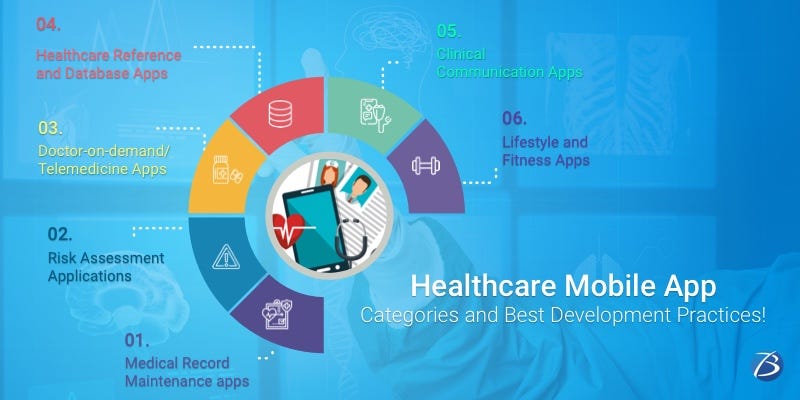
Healthcare mobile apps come in various categories. The noteworthy ones are as follows.

Medical Record Maintenance apps

This category of mHealth apps come with the following functionalities:

  • Scheduling doctor-patient appointments
  • Easing out the process of updating patients’ records such as doctor visits, medical examinations, prescriptions, health parameters like blood pressure/sugar levels, etc. for tracking patients’ progress.
  • Enabling practitioners to save healthcare info of patients using the prescription module
  • Recording procedures and allowing searching patients via their I.D.

Risk Assessment Applications

These apps are integrated with wearable devices and EHR (Electronic Health Records) for real-time monitoring of medical conditions- tracking parameters like heart rate, identifying health risks in patients, electronic fetal monitoring for patients in labor (EFM), etc. Healthcare app developers often use machine learning techniques for pattern recognition when designing risk assessment apps.

Doctor-on-demand/Telemedicine Apps

Telemedicine apps commonly known as “doctor-on-demand” provide patients the convenience of receiving doctor consultations as well as treatment from the comfort of their homes or offices. Patients can choose from a wide range of practitioners, book appointments, attend the consultation session via video conferencing, and make payments using an integrated payment gateway. Some special features of telemedicine apps include:

  • A two-way video connection between patients and doctors
  • Virtual waiting rooms that track the patients’ waiting time and allow them to gather the required information prior to consultation
  • Options that provide patients the feel of attending offline appointments including EHR, in-built messaging, e-Prescriptions, etc.

Healthcare Reference and Database Apps

Such applications keep doctors informed about the most recent healthcare information concerning diseases, medical conditions, symptoms about diseases, medications, etc.

Clinical Communication Apps

These apps facilitate communication with clinical specialists in a healthcare facility and thereby improve the process of clinical decision-making. The features include messaging, voice chatting, file sharing, and maintaining EHR systems. Some examples are sending PACS and Lab results to doctors, EHR integration for editing patients’ records in real-time, and storing files on a cloud-based platform like AWS, Google Cloud, Microsoft Azure, etc.

Lifestyle and Fitness Apps

These apps are a blend of daily tips on healthcare and fitness, diet, nutrition, exercises, and training/courses for improving an individual’s well-being and state of mind. These apps also track sleep patterns and assist in practicing mindfulness.

Healthcare Mobile App Development: Major Strategies

Identify a Unique Selling Point

The mobile app market is flooded with various outstanding solutions. Therefore, the healthcare app you have envisioned wouldn’t taste success unless it has a unique selling point. For this reason, you need to:

  • Conduct a thorough market analysis of the existing apps to identify the gaps that can be filled and the specific features that will provide additional value to your application.
  • Analyze your target audience to figure out their pain areas and comprehend their requirements; so that you can develop a customized medical app solution that suits their needs.
  • Carry out competitor analysis to gauge the minimum benchmark required to succeed and spot the mistakes they have committed.

Having a word with the stakeholders of the healthcare industry such as doctors, patients, nurses, paramedical staff, etc. will provide insights on creating an end-product that is effective, practically handy, and genuinely helpful.

Adopt an Omnichannel Strategy

The following perplexing questions should pop up before you commence the development process.

  • Which device is most suitable for the app – a smartphone or a tablet?
  • Which platform to pick – Android, iOS, or both?
  • Is there any need to activate the app/website with Google Assistant or Siri?
  • Would in-person interactions utilizing the camera prove more beneficial for the app?

Well, before you decide on the ideal blend of touch-points for your app, you must consider certain factors. We are living in an omnichannel world wherein digital users do not interact with an organization using only one channel, and so adopting a multi-touch-point strategy will work.

However, your touch-point strategy depends upon the preferences of your targeted audience as well. This is because the preferences of users belonging to different age groups are not the same. For instance, elderly consumers mostly prefer either a tablet or a website, whereas the youngsters are likely to interact with your healthcare solution using a mobile app and voice assistants like Google Home Skill or Alexa.

Opt for the MVP-first approach

Another crucial decision is choosing the right approach – “Whether to create a full-fledged app at one go or build an MVP first and then gradually add features through updated versions?” Developing a feature-packed healthcare app may sound like a lucrative option, but for expediting the success of the app, the MVP-first approach is good to go with.

An MVP refers to the most basic version including all the essential features. The MVP-first approach is profitable because it speeds up the time-to-market. Furthermore, you get an opportunity to validate your app idea and can utilize user feedback to add the right set of features incrementally, thereby adding value to your product.

Integrations and APIs

For promoting interoperability, it is necessary to integrate your app with EMRs and EHRs. Additionally, integration with fitness and healthcare wearables and utilization of AI algorithms for obtaining actionable and insightful inferences based on the collected data works wonders for optimizing healthcare outcomes. For this reason, you must ensure whether the corresponding APIs are available for commercial usage and if there is any need to open source your code after you use them.

Adhere to HIPAA and HITECH regulations

For making your healthcare app HIPAA compliant, you need to adhere to the HIPAA Privacy Rule and the HIPAA Security Rule.

HIPAA Privacy Rule sets national standards in the United States for protecting the health records of individuals as well as their personal healthcare information including medical clearinghouses, health plans, etc., and the medical providers conducting healthcare transactions electronically. This rule limits the usage and disclosure of patient information without their authorization, provides patients the right to obtain a copy of their medical data and request corrections, etc.

As per the HIPAA Security Rule, apt technical, physical, and administrative standards have to be maintained for ensuring the security, confidentiality, and integrity of electronic medical data.

HITECH, the Health Information Technology for Economic and Clinical Health Act, mandates the adoption and meaningful utilization of health information technology in mHealth apps. It addresses the safety and privacy concerns related to the electronic submission of medical information and facilitates the civil and criminal enforcement of HIPAA regulations.

Conduct Extensive Testing

Healthcare apps require rigorous testing to ensure the creation of an impeccable end-product. This is because the bar for accuracy, quality, safety, and security is considerably high; and your app must conform to the highest standards of quality assurance before you publish it on the app store. Check out the standardized testing approach all medical app testers need to follow.

  • To ensure confidentiality and privacy of healthcare data, set up stern authorization and access control measures within the app. This way the data will be delivered to only the intended recipients.
  • Medical data being a soft target for hackers, testers need to identify and get rid of all areas of vulnerability. So, encrypt data via a transport layer security to enable data validation within the app.
  • A usability test is crucial as even a minor error can lead to clinical issues and adversely impact the app’s overall outcome.
  • Test the app against high load and performance benchmarks as ready access to patients’ data has to be provided whenever needed.

Plan App Monetization Strategies

Take a look at the commonest app monetizing strategies.

  • Offering free trials to users in case of paid apps
  • Adopting the models of in-app purchases and subscription
  • Generating revenue via advertisements and medicine sales

Final Verdict:

I hope this post has enlightened you about the key areas you need to watch out for while developing a disruptive healthcare mobile app. Contact us for further queries.

If you have already built a fully functional Healthcare application, let us know your experiences in the comments section below.

To know more about our core technologies, refer to links below:

RoR App Development

Java App Development

Swift App Development

How Conference Sponsors Benefit from Innovative Virtual Conference Apps?

Event apps or virtual conference platforms have completely transformed the way how events used to be conducted. Here are some interesting scenarios:

  • Angel Capital Association, a renowned organization based in Washington DC, made use of a modern-day event application for proactively conducting their annual summit virtually, which used to be held in-person otherwise. This enabled the organization to offer networking opportunities to the participants as well as marketing exposure to the event sponsors.
  • ICANN, an American nonprofit organization and multi-stakeholder group, based in Los Angeles, CA, had planned for an in-person event, but owing to the ‘stay at home’ conditions amid the Covid-19 pandemic, the group deployed the event to a robust virtual conference app, and hosted the app successfully, thus, providing incredible value to all stakeholders.

These scenarios prove how technology has drastically impacted the event industry. All kinds of events, whether private or corporate, can be conducted from anywhere, without even renting a venue location.

Such virtual event apps offer numerous other advantages and everyone using the event apps benefits from them. But one party gets a lot more goodies and privileges from them- “the Sponsors”. These event apps attract and engage participants and this generates more value for sponsors.

Let’s have a glance at a few more advantages, rather reasons why the sponsors love the conference applications.

Key Reasons why the Sponsors Love the Virtual Event Applications

Provides Instant Event Information to Participants

Generating sales is the principal goal of the sponsors. For this, the event sponsors would want to provide valuable information to the attendees. Also, they would want to educate the attendees about their products and services. The event apps act as a platform in this case. The apps enable the target users to download the content of those products and services before, during, or after the events are hosted. It is also possible to include external links or bios in the profiles of sponsors and even exhibitors. This will allow the app users to instantly access and gather a lot of vital information through the app.

Helps the Planners and Sponsors Go Green

Event apps help in cutting down costs of printing invitation cards paper handouts, flyers, etc. as such messages can be sent directly to the smartphones of the attendees. Also, any other content or important information can be displayed on the app itself and attendees can instantly access that information. This not only reduces costs but also supports the ‘go green’ approach.

Event Apps Drives More Traffic for Sponsors

Sponsors would always want that more and more participants find them and communicate with them. Customized conference apps help the vendors in achieving this goal. Facilities like interactive maps and the information provided to attendees through the apps help the attendees to easily find the sponsors in less time. Also, another new-age feature- gamification in the apps, helps to design interesting activities for engaging the attendees. These activities include- earning points when they connect with sponsors through the app. Attendees may also earn points after answering certain questions about the products or services of the sponsors.

Virtual Conference Apps enhances Branding

The logos of the sponsors can be added on the splash pages in the apps, so that, when the users use the apps, they can see those logos and get to know about different brands of the sponsors. The company names or brand names of the sponsors can be highlighted on various pages on the apps for brand exposure.

Enables the Sponsors to Collect Insightful User Data

These applications enable the sponsors, and vendors to gather insightful information about the event attendees through user profiles, QR codes, etc. Attendees too can access the information as required. They simply need to scan a QR code so that they can easily connect with sponsors or vendors. This process also helps to eliminate the need to upload contact lists manually and eliminate the errors to a great extent. Consequently, the sponsors can gather the data of potential leads using the insights collected from the conference app.

Improves ROI for event sponsors

When the event is a hit, then attendees automatically talk about how much fun they had and they tend to add such feedback on the apps too. The apps add engagement, excitement, and value to the events. Besides, they help in creating an amazing attendee experience which in turn attracts more participants. This increases the ROI of the events and makes the sponsors happier.

Event Applications Enable the Sponsors to Collect Reviews and Feedback

The feedback collected from the participants and guests through the event apps helps in understanding the progress of the events. Feedback can be collected instantly after the events or even individual sessions, keynotes, etc. Besides, attendees can easily provide feedback, or fill surveys when this facility is available at their fingertips on their smartphones. Also, using the Audience Response Engagement Systems in the apps, it is possible to gather real-time data about the opinions of the attendees. This data helps the sponsors to understand how their event promotional activities are working and accordingly take further steps to improve them if required for generating more leads.

Final Thoughts

Conference apps prove to be an impactful tool to help the event sponsors, and also the event marketers to make the events highly successful. These apps help to increase interaction during events, improve engagement of participants, build a community of like-minded people, and boost the revenue of sponsors. Owing to such myriad advantages, virtual conference apps are gradually becoming an industry standard over the globe.

Will like to wrap up this write-up at this point. Do share your views with us.

Also, if you want us to architect an amazing conference application for conducting virtual as well as live apps, connect with us. We are a leading Event App Development Company having expertise in designing virtual events apps for diverse types of events.

Friday, August 27, 2021

Is hiring an Offshore Software Development Team a safe bet?

Hiring an offshore outsourcing software development company to execute product development is gaining momentum amongst the business enterprises located in top-tier countries like U.S., Canada, etc. A report by the online research portal XTGLOBAL, states:

“In the year 2020, almost 80% of the top-most firms worldwide i.e. fortune 500 companies, possessed offshore teams for accomplishing their business operations, and this trend is expected to grow in the years to come.”

These stats indicate the unprecedented popularity of the offshoring approach – outsourcing development tasks to vendors located in offshore countries. Yet, some entrepreneurs are unsure about the profitability of this strategy and wonder whether offshoring is a safe bet.

This blog weighs the benefits as well as drawbacks of offshoring and enlightens you about the reasons to consider the offshore model for software development. But before we commence, let’s take a quick look at how these offshore teams work.

How do Offshore Product Development Teams Function?

An offshore software development team usually follows an agile methodology which helps create a clear roadmap that fosters team collaboration, iterative development, and transparent communication. Such teams focus on a common objective of delivering the best possible experience to their client partners. Moreover, their developers are experienced, proficient, organized, and analytical individuals who clearly understand the clients’ specific requirements and strive hard to accomplish the best quality in the product development process as per client needs.

Top Reasons to Invest in Offshore Software Development

Obtain Access to a huge Talent Pool

Would you like to obtain the best software development services available across the globe without much ado? Well then, offshoring is the most viable option. Why? If you intend to hire an in-house team of professionals for your project, you have to go through the hassles of fetching and recruiting programmers. This process is not only time-consuming but also involves lots of effort and expenses. Contrarily, offshoring enables you to move beyond the confines of your geographical boundaries and choose from a huge pool of talented professionals around the globe.

Reduced Turnover Rates

It is observed that turnover rates go higher when the demand for the workforce exceeds the supply. To address this challenge, the U.S. IT firms, adopted the initiative of offshoring product development during the late 1990s, and this strategy succeeded well, as it reduced the local demand to a great extent.

Besides, most of the popular offshore destinations experience high unemployment rates and much lower demand for software services from their domestic markets. As such, these countries promise much lower turnover rates and so, they’re worth the investment.

Lesser time invested and Greater Productivity

Hiring an offshore vendor agency eliminates the need for the client company to invest time in routine activities such as project management, HR processes including employee hiring/retention, and many more. Besides, the client firm need not waste time on the task of training new developers as the offshore staff possesses the necessary skills. Hence, this approach saves time and leads to greater productivity for the client company. After all, time is a crucial factor for start-ups and mid-sized companies to thrive in today’s competitive scenario.

Cost-efficiency

Client enterprises located in high-tier countries like U.S., Canada, U.K, etc. can cut down project expenses considerably by hiring offshore development services. The reasons are as follows.

  • Offshore locations come with much lower and highly affordable developers rates due to the lower cost of living.
  • The client firms need not pay for overhead costs like renting office spaces, payroll expenses, recruitment charges, insurance benefits, or employee vacations. Payment has to be made only for the services they use and all other costs are taken care of by the vendor company.

Effortless Scaling

Every business enterprise, particularly start-ups, comes across a situation when their team needs to be scaled or changes are to be made in the technology stack, as required by the scope and stage of the project. This turns out to be quite challenging and hiring an in-house team for this purpose could cost a fortune.

Offshoring, on the other hand, enables the clients to effortlessly scale their business as per the need. This is because the offshore software development company hired, will provide clients with an additional workforce whenever the need arises and they can easily switch developers between projects. Furthermore, the dedicated development team will take care of various other aspects like providing advice on the technologies in which the client firm should invest, profitable engagement and marketing strategies, plan of action for staying competitive, etc.

Access Most Recent Technologies at Affordable Rates

It is not feasible for most business organizations to access and maintain the latest technologies owing to their high expenses. The offshore agencies, on the contrary, focus on upgrading their skillsets and acquiring the latest technology stacks, as offering quality software development services is their prime objective. Additionally, they provide their clients with exceptional procedures, structured strategies, and highly organized documentation. These vendor agencies update and replace their clients’ software/systems whenever required.

Time to Focus on Core Business Functions

Certain software development activities like creating UI/UX designs, mobile app/website creation, implementing latest technologies like Blockchain, IoT, AI, etc. require continuous skill improvements, team supervision as well as a substantial amount of time and focus. For this reason, businesses are likely to get distracted from core functions.

Nevertheless, offshoring these tasks to reliable technology partners allows them the time to focus on core business operations. Thus, the workload gets divided and this synchronized way of functioning enables client enterprises to accomplish their goals.

Probable Risk Factors along with Remedial Measures

Take a look at the probable risk factors of offshoring and their remedial measures!

  • The vendor agency might fail to meet the product delivery deadlines and cause unnecessary delays. But, hiring a proficient manager/IT executive for monitoring and managing the project will zero down this risk factor.
  • The protection and security of data may involve certain risks when offshoring projects. However, to rule out this possibility, you need to be extra cautious while protecting and handling intellectual property rights. Besides, offshore firms, too take efforts to maintain data privacy.

When should you offshore Product Development?

You have Budget Constraints

Hiring in-house software professionals will cost you a fortune. So, if you have budget constraints, offshoring is the best bait as it will allow you to hire talented engineers at much lower rates.

You need to speed up development

Time is money! But, if you do not possess sound technical knowledge and enough experience, essential tasks like recruitment of software developers, extensive research on the best development tools, technologies, etc.; will be challenging and time-consuming. But, the highly competitive market you are involved in demands reduced time-to-market and prompt utilization of opportunities as soon as they emerge. So, to speed up the development process, offshoring proves beneficial.

You intend to minimize Liabilities

The entire process of the software product development process right from the inception phase to deployment of the end-product requires resources, time, attention, and focus. Moreover, a dedicated team has to be maintained and the necessary tools and technologies are to be acquired. All these crucial prerequisites may prove heavy on your pockets, particularly if you are a start-up or mid-sized company, hence trying to reduce liabilities and utilizing the available resources is most important to reduce the cost.

You need Flexibility

There are times when you prefer short-time contractual software developers instead of hiring and maintaining a full-time in-house development team. In such scenarios, offshoring employees help as your obligation to those professionals ends after the completion of the project.

You lack Quality and Innovation

Quality and innovation are stepping stones towards the success of software app development and allow you to gain a competitive edge over peers. Hence, if you find that your product quality is below average and the standard of innovation is deteriorating, it’s high time to adopt the offshore software development approach.

Bottom Line:

Adopting the Offshore development approach is a lucrative option and guarantees a higher ROI for businesses. This strategy does have a few pitfalls, but these can be resolved easily. In other words, the myriad advantages of offshoring undoubtedly outshine the drawbacks.

Looking for a reliable outsourcing firm and would like to gain more insights on this approach? Contact Biz4Solutions, a leading Offshore Software Development firm with extensive experience in serving global clients!

To know more about our core technologies, refer to links below:

Flutter App Development Company

PHP App Development Company

Wordpress Development Company

Thursday, August 26, 2021

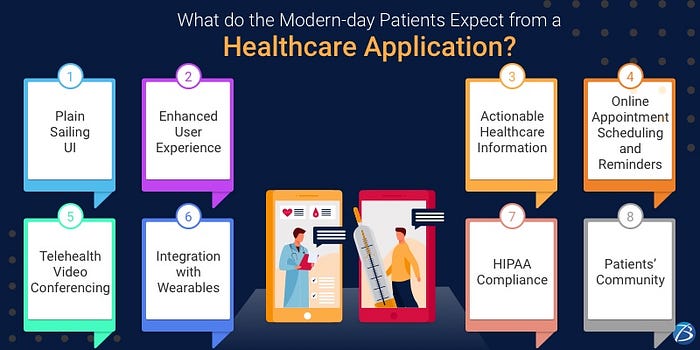
What do the Modern-day Patients Expect from a Healthcare Application?

The trend of delivering healthcare solutions via a Mobile Healthcare App is garnering popularity and recognition at a fast pace! Medical facilities, as well as providers, are heavily investing in healthcare app solutions to enhance the service quality and encourage the approach of patients’ self-management. These solutions usher in immense benefits like timely medical aid regardless of the patients’ location, reduced errors concerning diagnoses and treatment, improved doctor-patient communication, lesser medical expenses, and many more.

Yet, it has been observed that the adoption rate of healthcare apps is lower than expected despite the availability of endless options. The reason is simple. Most apps fail to satisfy the expectations of the end-users. So, before you proceed to hire a Healthcare App Development Company for crafting that perfect app for you, you must be aware of what features your target customers are looking for. Now, the million-dollar question is, “What do patients expect from a healthcare app?” Well, my write-up answers it all.

This blog throws light on the consumer expectations from a healthcare app and also provides guidance on the essential features to include in a patient-centric healthcare app.

What do Patients expect from a Mobile App?

Patients using a healthcare application generally prefer the following features:

  • Effortless scheduling/canceling/postponing of a doctor appointment
  • The facility of obtaining ePrescriptions including the dose recommendation and being able to access health records easily
  • The availability of the directory containing all health records at a single place
  • Online screening of minor symptoms that do not require a physical visit to the doctor
  • Regular aid concerning healing and early rehabilitation of patients

Key Features to include in a Patient-centric App

Plain Sailing UI

Patients using healthcare applications belong to various demographics and so we cannot expect every one of them to be tech-savvy. For this reason, your app must involve an easy login procedure, preferably through a single ID card or a Google account. Its functioning should be such that the users receive the maximum output of healthcare information by providing minimum or precise inputs. An audio-based patient compliant portal will be a perfect example in this case.

If the first page of your app asks for too many details, the users are reluctant to survey further. Therefore, it is important to devise progressive reduction methodologies for integrating information and sections so that the patients’ contribution gets reduced.

Moreover, your app must stimulate self-explanatory navigation for switching between various interfaces. Hence, it is a good idea to implement virtual assistants or audio-based instructions in multiple languages, for guiding users as they sail through your app.

Furthermore, all aspects of your app should be visually likable and instantly available. Remember that the patients’ grasp on your app is dependant on factors like fonts, colors, theme, loading speed, and response time of the application.

Simple but Amazing User Experience

Most apps fail to impress end-users owing to below-average user experience. As such, it is important to deliver an amazing digital experience by providing a user-friendly UI and eye-catching data visualization based on the target audience. For instance, if your target audience happens to be elderly individuals, it is advisable to opt for larger-sized app icons and texts.

Actionable Healthcare Information

Patients are going to stick to your app, only if it offers detailed, valuable, and actionable medical information. This is because patients prefer obtaining detailed information about their medical condition, and its causes; so that they can take necessary action based on the opportunities available. Hence, your healthcare app solution should provide all-inclusive and actionable details on a particular medical condition.

Online Appointment Scheduling and Reminders

The online appointment scheduling facility comes with the following advantages for patients.

  • The convenience of booking appointments online and the flexibility to alter the appointment schedule or cancel the same
  • Round-the-clock availability, ease of booking appointments, and also a great time saver.
  • Better error handling by hospital staff and efficient management of appointments

Besides appointment scheduling; modern-day customers, specifically those with chronic conditions, prefer receiving reminders concerning appointments, medicine timing, prescription renewals, follow-up schedule, and checking of vitals like blood pressure, heart rate, etc. Such reminders are provided via text message notifications and even phone calls. This strategy works wonders in retaining customers as well as attracting new ones.

Telehealth Video Conferencing

Telehealth Video Conferencing has elevated doctor-patient communication to a new level altogether. It provides an effective platform where the patients can connect to their practitioners and avail of online consultations instead of physically paying a visit to the medical facility. Check out its distinct benefits for patients.

  • saves patients’ time as well as expenses
  • allows patients to easily co-ordinate with specialists
  • ensures the continuity of care
  • provides remote care for patients residing in remote places
  • enables medical providers to stay informed about the patients’ condition and remotely monitor their medical data

Integration with Wearables

Wearable devices like smartwatches, fitness bands, and health trackers are quite popular amongst the masses. So, if your healthcare app has the ability to integrate with wearables, it would be widely adopted. Wearable devices collect crucial medical data like blood sugar levels, heart rate, tremors, sleep patterns, posture control, workouts, etc. enabling patients to know more about their fitness regime and manage their medical conditions in a better way.

HIPAA Compliance

Most patients these days look for HIPAA compliant healthcare apps to make sure that their healthcare data is protected and the personal information shared by them is not compromised. Patients are critical about the medical data shared as this data is used for insurance coverage as well. HIPAA (The Health Insurance Portability and Accountability Act) mandates that any app accessing PHI (Personal Healthcare Information) must adhere to HIPAA regulations and security standards. A HIPAA compliant app ensures that sensitive personal information and patients’ data are protected.

Patients’ Community

Adding the feature of a patients’ community will add value to your healthcare application as patients wish to connect and interact with each other. For example, a patient who has been diagnosed with a specific health condition or disease would want to contact individuals suffering from a similar condition. This strategy allows patients to garner the much-needed comfort level and peer support, and is an excellent way to engage end-users.

Roadmap: Generation of Actionable Insights from your Target Audience

It is advisable for app providers to build an MVP first instead of a full-fledged application as this is the best budget-friendly way to know what your target audience expects from the healthcare app. An MVP is the most basic and generic version of the envisioned app, with all the primary features and functionalities. In the case of a mHealth app, an MVP plays a vital role in generating actionable insights from the beta testers and early adopters. Once, you identify the areas of improvement through user feedback, promptly resolve the shortcomings and implement the necessary add-ons by launching updated versions. This will make your healthcare mobile app all the more convenient and accessible.

Final Verdict:

There is a high market demand for a highly functional and scalable healthcare app. However, in today’s dynamic and competitive market your app will fail to succeed if the right strategy is not adopted. Hence, all Medical & Healthcare Application Development Companies must possess clear visibility of the expectations of their target audience and plan accordingly. Be smart enough to read the patients’ minds and include patient-centric functionalities for building a game-changing app.

Contact us for further queries and assistance in hiring healthcare app development services!

To know more about our core technologies, refer to links below:

RoR App Development

PHP App Development

Flutter App Development