Showing posts with label event app development. Show all posts

Tuesday, May 23, 2023

All-inclusive Insights on Virtual Event Apps and Event App Development!

Virtual event software solutions entered the market long back, but their popularity reached its peak during the pandemic. During this phase, thousands of personal as well as corporate events got canceled or postponed, affecting numerous businesses. But then, virtual event applications came into the picture. Organizers conducted countless personal as well as corporate events through these apps. As such, several apps got outstanding attention, which was not even known to the masses, and their downloading spiked.

Downloads of video conferencing applications were recorded to be 62 million, just in a single week of March 2020, after the pandemic,” as reported by TechCrunch, the renowned online newspaper for technology news. Since then, a plethora of virtual event software apps flooded the market and the face of the online conferencing and virtual event industry changed forever. Event-driven applications continued to be popular and this trend is here to stay.

This post throws light on the fundamental steps to creating a next-gen virtual event software solution. We have also spoken about the significant features of such apps and how they prove advantageous to diverse businesses. So, if you are planning to build a virtual event management app, this post answers all your questions.

Virtual Event Apps and Their Potential Advantages
What is a virtual event? Well, the events that one hosts online allowing the participants to participate or view the event from any corner of the world are called virtual events. These events can be webinars, virtual conferences, internal or external hybrid events, etc. Such digital events have some agenda and are usually expected to be collaborative sessions and are streamed online.

Such digital events are hosted using live-streaming platforms. Here, live streaming is an essential functionality of these apps. Zoom, Webex, Google Meet, Vimeo, Digitell, GoToMeeting, Intrado, Evia, etc. are a few examples of popular platforms and apps.

Take a look at the advantages of these applications!

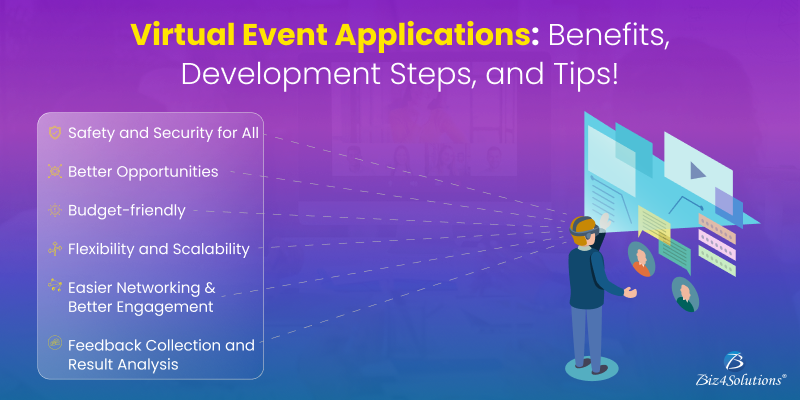
Safety and Security for All

During the pandemic, online mobile event apps ensured the health and safety of the participants, event organizers, and all the involved staff. Without any need for in-person gatherings, the social distancing norms were maintained.

Better Opportunities

All the details like the number of tickets sold out for events, related email marketing reports, etc. are available on a single application. Besides, the participants can access the pre-recorded events, as per their will and availability. Also, they can chat with other users during live events to build business relationships. Such benefits offer extended opportunities to both app owners as well as participants.

Budget-friendly

Virtual events prove immensely cost-effective as compared to offline events. The event organizers only need to spend on the initial establishment cost. Once they develop a virtual event platform, hosting events become budget-friendly.

In offline events, the event planners have to consider a host of other costs like arranging for expensive equipment, booking a venue, etc. They also have to incur expenses like travel, accommodation, & catering for participants. Thus, with virtual apps, the cost of events is drastically reduced. This approach is particularly advantageous for small-sized organizations, start-ups, and ones with budget constraints.

Flexibility and Scalability

Whether it is a simple sales kickoff meeting, a thought leadership meeting, or any event for that matter; all types of events can be flexibly hosted using these virtual platforms. Attendees from any part of the globe can attend virtual events or meetings at the same time without having to travel in person to the event venue. Besides, event organizers enjoy a lot of flexibility while planning events. They can speedily adjust event schedules and programming as per the need of the hour. This can really help organizers in situations when they come across unexpected changes or disruptions.

The virtual event organizer app approach also benefits individuals with mobility issues or other physical disabilities and find it challenging to attend an offline event. Furthermore, several apps provide the multi-lingual feature as well.

Easier Networking & Better Engagement

Participants don’t have to personally visit a particular location to meet new people. Online chatting options make things much easier. Besides, they can conveniently collect details like the name, profiles, companies, etc. of other professionals in the meeting.

Virtual event platforms can offer multiple user engagement tools like Q&A sessions, live chats, surveys, polls, etc. These functionalities play a crucial role in providing engaging event experiences to attendees. They can interact with other attendees as well as the event content in a more meaningful way.

Feedback Collection and Result Analysis

Online event solutions generate valuable data on attendee behavior, engagement, and preferences. Mobile event apps can track data like the number of participants, the timing when they logged in, what amount they paid, and how, etc. This insightful data gathered are quite useful for result analysis.

Also, these apps allow the participants to provide feedback easily through polls or real-time sessions. Event-related data and attendee feedback help organizers and presenters evaluate the overall performance of the event and identify the areas of improvement. This will help them to make future improvements and tailor the content to accommodate the requirements and preferences of their targeted audience.

Top Features of Virtual Event Apps

  • Event Registration
  • Profile creation of the users
  • Event page for details like event topic, date and time of the event, host details, etc.
  • Speaker booths for multiple speakers to create their profiles and related details
  • Facility to record live sessions and meetings
  • Real-time chatting, one-to-one, and group chatting options
  • Live video streaming option
  • Payment options via PayPal, Google Pay, credit/debit cards, etc.
  • Social media integration for sharing event-related data with other contacts
  • Integrations like sales tools, email marketing, etc.
  • Report generation and analysis
  • Screen sharing
  • Virtual hand raising
  • Mute participants
  • Audience polls

Steps To Architect a Virtual Event Application

Here are the crucial steps required for the creation of an online conference app:

Create the Architecture: Create an architecture that supports the requirements of your event management activities. Consider parameters like the kinds of interactions your app will support, the number of concurrent users, and the specific prerequisites related to data storage and retrieval. You can consider choosing a microservice architecture to facilitate modularity, maintainability, and scalability.

Development of Backend: In the initial development stages itself, build a server for running the application. It is always advisable to create the server from scratch rather than make use of any ready-made technologies.

Designing User Interface: UI marks the first impressions for your virtual conferencing application and hence, it is of utmost importance to thoughtfully design a captivating and intuitive UI.

Android and iOS Compatibility: If you want to reach a wider audience range, your event management mobile app must run on both- Android and iOS devices. For ensuring that your video streaming app supports Android, make use of WebRTC and for iOS, use Swift.

Important Factors to consider during Event App Development

Next, let us look into the three most important aspects you need to consider during the development of a virtual event app- cloud network, video architecture, and content management.

Cloud Network

The virtual conferencing applications come with an integrated data center infrastructure that is strictly supervised, tracked, and regularly modified by the development teams. This cloud network is created for providing global connectivity and for enabling users from all across the globe to connect and participate seamlessly. For example, Zoom has more than 15 data centers globally which are going to be expanding in the coming years.

Video Architecture

Now, the app architecture should be optimized to meet the video requirements for which, four important features must be considered, as given below:

Distributed architecture: This architecture enables the participants to share meetings across the network and allows them to easily join meetings via private communication using the nearest data center. Using a distributed architecture rather than a centralized approach will offer the required scalability to the app so that thousands of viewers can simultaneously get a consistent video experience.

Multimedia Routing: This approach offers the users with various streams of videos from other participants. It also reduces the need for computers’ power and thus, makes the app a greatly scalable system.

Video Encoding and Streaming: Your application should be able to encode and stream video content to attendees in real-time. Event app developers use video encoding techniques for compressing videos into suitable formats for streaming videos. The videos are then streamed to the attendees via the Internet. Usually, event apps use Cloud-based services like Microsoft Azure and Amazon Web Services for handling the activities of encoding and video streaming.

Multi-bitrate Encoding: Every single stream can be altered to several resolutions besides stream routing. Due to this, the need to decode, encode, and optimize the output is removed. This also allows the apps to provide video quality levels depending on the network capabilities and the system.

Service Application Layer: Higher quality of the service application layer ensures optimized audio, video, and screen-sharing for every device and the available bandwidth for offering the best network-wide experience.

Content Management

A virtual event organizing platform requires a content management system for managing the video content that the presenter will display during the event. So, organizers need to upload, organize, and schedule the content for various sessions and track the event. You may also have to integrate the application with third-party systems like registration and payment systems. This way, you can ensure that your attendees can access the content effortlessly.

Concluding Views

Virtual event planning apps help organizers plan and execute events in a more effective way with productive outcomes. At the same time, the attendees also go through a flexible and engaging event experience. However, creating an amazing virtual solution for hosting events is a complex process. You need to plan carefully and follow the correct execution steps. Hence, it’s important to pick the right event app development company and app development resources that are best suited to your use case development needs.

Thursday, December 2, 2021

The Significant Role of Event-driven Apps in Software Development!

The ever-evolving digital revolution is transforming the way applications used to function. Since the past couple of years, apps have become way more advanced and complex with the usage of several innovative technologies, frameworks, and data centers. Here are some of the modern-age trends:

  • Implementing microservices architecture
  • Apps are moved to Cloud
  • Apps communicate with each other via lightweight protocols such as REST APIs, RPC calls, etc. instead of the erstwhile practice of sharing the same computational space.

These state-of-art practices have reshaped the methods of software development altogether. One such innovative approach is the usage of an event-driven architecture for building futuristic apps.

In traditional three-tier apps, data (base) used to be the core of the system. With the advent of event-driven applications, this focus shifted to events as well as the manner in which the events are flowing across the system. This shift has completely transformed the way how apps are designed.

This post takes you on an enlightening journey into the world of event-driven app development. Let’s explore the myriad aspects of event-driven architecture, its specific use cases as well as business benefits.

Event-driven Approach and the Data-driven Approach: Comparison

An event-driven architecture focuses on events, unlike the traditional model, service-oriented architecture that is based on data at rest. The shift from a data-centric model to an event-centric model means moving from the practice of gathering data/data lakes and emphasizing on data in flight as well as tracking the data while it is moving from one place to another. The event-driven model still considers data to be important; the only difference is that events become the most crucial component.

The service-oriented model prioritizes data and ensures that no data is lost; whereas the major focus of the event-oriented model is to ensure that you respond to the events as soon as they occur. This is because events are driven by a law of diminishing returns – as the events get older, their value diminishes. Nevertheless, both the service-oriented and the event-driven architectures are used together in most modern-era applications.

Understanding Event-driven Architecture?

Event-driven architecture refers to a specific kind of software architectural model that is used for designing an app. It is quite different from the conventional request-driven model. The reason is that, in an event-driven model, the core structure of the software solution is formed by the capture, processing, communication, as well as persistence of events.

This model is a programming approach implemented during product development and not a language or technology. Event-driven programming segregates the event-processing logic from the remaining portion of the program’s code. Hence, event-driven apps can be built using any programming language – most of the visual and object-oriented languages like Java, Visual Basic, Visual C++, etc. support this model.

What is an event?

An event is an identifiable occurrence or a change in the state that has significance for the hardware or the software of the system.

An event can originate from external as well as internal inputs. For instance, its source can be user-generated like the keystroke/mouse click, system-generated such as the loading of a program, or an external input like sensor output. The role of an event-driven app is to detect the events as soon as they take place and thereafter, manage/process those events employing event-handling processes.

Events: Examples

Take a look at some examples/use cases of events to serve diverse business requirements:

  • Web server: The receipt of an HTML message
  • Text editor: The pressing of a key or the request for resetting a password
  • Fraud detection: The detection of illegal trade patterns
  • Commercial business processes: The acceptance or rejection of a loan application
  • Real-time warehouse management: A warehouse updating its inventory, the arrival/delivery of a package to the desired location, or a robot reaching the desired destination.
  • Management System: A new rostering schedule being ready for distribution to the concerned personnel.
  • Gaming (Car racing): A car hitting another one in a computer game

Actions triggered as a response to events

Once the event notification is sent, this occurrence/change in state is captured by the system and then the app responds to the event. The aforementioned events are likely to trigger one or more actions as a response such as logging the event for further monitoring. Some instances of such responses are:

  • Virtual conferences where the sale of tickets are closed after all the seats are booked
  • An email for resetting the password is sent to the customer
  • The account involved in a fraudulent transaction is locked and the security team has been notified about this event
  • An order for more items (that are running low in the inventory) is placed

How does the Event-driven architectural Model function?

Event-driven architectures are employed for the purpose of building, detecting, consuming, and reacting to events. Publishers, subscribers, sources, and sinks are some of its crucial components. This is how they work.

  • Sources are the places where data gets generated.
  • The publisher captures the data contained within the event and then stores it in a repository.
  • This data is then consumed by the subscriber who potentially responds to the event.
  • Sinks refer to the destinations to where the data is sent by the subscribers.

For example, a retailer gathers data on every purchase that is taking place in all his stores around the globe. This data is fed into an event-driven system or app that is keeping a watch on fraudulent transactions and then sent to a credit card processor or for the next set of actions. From manufacturers’ perspective, they are informed about the data coming from their equipment that inform facts including temperature and pressure. This information obtained from the data helps them in real-time event monitoring and triggering of actions such as failure predictions, scheduling maintenance, etc. 

Event-driven Architecture: Models and their Functions

Pub/sub Model:

This model is a messaging infrastructure that is based on subscriptions to a stream of events. After the occurrence/publishing of an event, it is sent to the concerned subscribers who are supposed to be informed.

Streaming Model:

Using this model, the events are written to a log instead of event consumers subscribing to an event stream. This model enables the event consumers to not only read any portion of the event stream but also join the stream at any time.

Event streaming is categorized into three types.

Event stream processing:

This category makes use of a data streaming platform such as Apache Kafka for ingesting events and processes or for transforming the event stream. This type of streaming is used for detecting meaningful patterns in the event streams.

Simple Event processing:

Under this category, an event triggers an action in the event’s consumer almost immediately.

Complex Event processing:

With this category, an event consumer is needed for processing a series of events to detect patterns.

What kind of Apps/Software Systems is best suited for Event-driven Architecture?

Event-driven app development leads to the creation of digital enterprise app solutions that are more agile, contextual, scalable, and responsive.

  • As the events take place, they are captured from their sources like IoT devices, apps, networks, etc. For this reason, the event producers, as well as consumers, can share the response information and status in real-time.
  • Owing to its scalability, this architecture allows you to create as well as respond to several events in real-time. So, modern-era apps that need to make use of consumer data in real-time, adopt this approach.
  • This approach is an ideal pick for future-friendly apps with distributed architectures because event-driven architecture allows minimal coupling.
  • Event-driven architecture is loosely coupled as the producers have no knowledge about the event consumers who are listening for an event and the events are not aware of the consequences of their occurrence. Therefore, it is a perfect pick for loosely coupled software like microservices. Microservices are designed for performing specific tasks based on event occurrences.
  • The event-driven model turns out to be very versatile as it functions well with unpredictable and non-linear events.

Event-driven Architecture: Business Benefits

The benefits of event-driven development are as follows:

  • Enterprises can obtain a flexible software system that is capable of adapting to changes and indulging in real-time decision-making.
  • Owing to this approach, businesses can think of their operations and generate data as events instead of viewing them as a couple of metrics on a quarterly/weekly report.
  • This real-time situational awareness enables business owners to make use of the available data that reflects the ongoing state of affairs of their systems while manual/automated decision-making processes. And, access to context and data leads to more effective and productive business decisions.
  • The organizational apps and systems utilizing the event-driven approach are more scalable and responsive as compared to other apps using traditional approaches.

 How are Event-driven Applications hosted?

The aptest platform for hosting event-driven apps is the serverless platform. The reasons are given below:

  • Event processing needs simple responses unlike typical transaction processing wherein complex processing is needed.
  • Events may originate from any location.
  • The frequency of the events ranges from zero to tens of thousands each second.
  • The serverless platform has the capability to scale as per the rate of generation of events and is less likely to fail in situations when some of the cloud resources are lost.

Final words:

The software development industry has started focussing on event-driven applications to make their systems/apps future-ready and gain a competitive edge over peers. So, it’s high time to engage event-driven app developers for smartening and accelerating your business processes.

If you are looking to create an app using event-driven architecture, contact Biz4Solutions, a prominent event app development company. We have extensive experience in this architecture and our event app development services are worth a try!

To know more about our core technologies, refer to links below:

Dot Net App Development

Java App Development

Ruby on Rails App Development

Tuesday, August 31, 2021

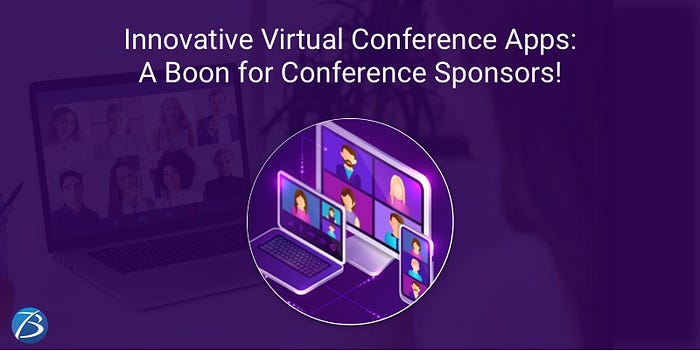
How Conference Sponsors Benefit from Innovative Virtual Conference Apps?

Event apps or virtual conference platforms have completely transformed the way how events used to be conducted. Here are some interesting scenarios:

  • Angel Capital Association, a renowned organization based in Washington DC, made use of a modern-day event application for proactively conducting their annual summit virtually, which used to be held in-person otherwise. This enabled the organization to offer networking opportunities to the participants as well as marketing exposure to the event sponsors.
  • ICANN, an American nonprofit organization and multi-stakeholder group, based in Los Angeles, CA, had planned for an in-person event, but owing to the ‘stay at home’ conditions amid the Covid-19 pandemic, the group deployed the event to a robust virtual conference app, and hosted the app successfully, thus, providing incredible value to all stakeholders.

These scenarios prove how technology has drastically impacted the event industry. All kinds of events, whether private or corporate, can be conducted from anywhere, without even renting a venue location.

Such virtual event apps offer numerous other advantages and everyone using the event apps benefits from them. But one party gets a lot more goodies and privileges from them- “the Sponsors”. These event apps attract and engage participants and this generates more value for sponsors.

Let’s have a glance at a few more advantages, rather reasons why the sponsors love the conference applications.

Key Reasons why the Sponsors Love the Virtual Event Applications

Provides Instant Event Information to Participants

Generating sales is the principal goal of the sponsors. For this, the event sponsors would want to provide valuable information to the attendees. Also, they would want to educate the attendees about their products and services. The event apps act as a platform in this case. The apps enable the target users to download the content of those products and services before, during, or after the events are hosted. It is also possible to include external links or bios in the profiles of sponsors and even exhibitors. This will allow the app users to instantly access and gather a lot of vital information through the app.

Helps the Planners and Sponsors Go Green

Event apps help in cutting down costs of printing invitation cards paper handouts, flyers, etc. as such messages can be sent directly to the smartphones of the attendees. Also, any other content or important information can be displayed on the app itself and attendees can instantly access that information. This not only reduces costs but also supports the ‘go green’ approach.

Event Apps Drives More Traffic for Sponsors

Sponsors would always want that more and more participants find them and communicate with them. Customized conference apps help the vendors in achieving this goal. Facilities like interactive maps and the information provided to attendees through the apps help the attendees to easily find the sponsors in less time. Also, another new-age feature- gamification in the apps, helps to design interesting activities for engaging the attendees. These activities include- earning points when they connect with sponsors through the app. Attendees may also earn points after answering certain questions about the products or services of the sponsors.

Virtual Conference Apps enhances Branding

The logos of the sponsors can be added on the splash pages in the apps, so that, when the users use the apps, they can see those logos and get to know about different brands of the sponsors. The company names or brand names of the sponsors can be highlighted on various pages on the apps for brand exposure.

Enables the Sponsors to Collect Insightful User Data

These applications enable the sponsors, and vendors to gather insightful information about the event attendees through user profiles, QR codes, etc. Attendees too can access the information as required. They simply need to scan a QR code so that they can easily connect with sponsors or vendors. This process also helps to eliminate the need to upload contact lists manually and eliminate the errors to a great extent. Consequently, the sponsors can gather the data of potential leads using the insights collected from the conference app.

Improves ROI for event sponsors

When the event is a hit, then attendees automatically talk about how much fun they had and they tend to add such feedback on the apps too. The apps add engagement, excitement, and value to the events. Besides, they help in creating an amazing attendee experience which in turn attracts more participants. This increases the ROI of the events and makes the sponsors happier.

Event Applications Enable the Sponsors to Collect Reviews and Feedback

The feedback collected from the participants and guests through the event apps helps in understanding the progress of the events. Feedback can be collected instantly after the events or even individual sessions, keynotes, etc. Besides, attendees can easily provide feedback, or fill surveys when this facility is available at their fingertips on their smartphones. Also, using the Audience Response Engagement Systems in the apps, it is possible to gather real-time data about the opinions of the attendees. This data helps the sponsors to understand how their event promotional activities are working and accordingly take further steps to improve them if required for generating more leads.

Final Thoughts

Conference apps prove to be an impactful tool to help the event sponsors, and also the event marketers to make the events highly successful. These apps help to increase interaction during events, improve engagement of participants, build a community of like-minded people, and boost the revenue of sponsors. Owing to such myriad advantages, virtual conference apps are gradually becoming an industry standard over the globe.

Will like to wrap up this write-up at this point. Do share your views with us.

Also, if you want us to architect an amazing conference application for conducting virtual as well as live apps, connect with us. We are a leading Event App Development Company having expertise in designing virtual events apps for diverse types of events.

Tuesday, August 17, 2021

Architecting a Mobile Conference or Event App: Benefits, Features, and Pricing!

As per a study, 37% of event planners make use of mobile event apps for event-related tasks. This is a sign of the rising demand for mobile conferences or event apps for organizing the events. Whether private meetings or large conferences, these mobile event applications are transforming this event planning sector at a fast pace.

So in this blog, we will have a glimpse at several aspects like vital features of the event apps, and their pricing. But before that, we will have a quick look at the key reasons behind the popularity of these apps. Let’s begin.

Significance of Event Planning App Development

  • One App for Multiple Events: A single branded event application can be utilized for organizing a host of events. It can become a trusted channel for the event planners, their staff, and all attendees.
  • Simple and inexpensive way to gather and deliver information: An unlimited amount of event-related information can be easily added to the app. This information can also be edited and immediately conveyed to the attendees through the app.
  • Enhanced Engagement and Interaction: A feature-packed event app comes with features and functionalities that enable high-quality meetings, better interaction, engaging activities, etc. Besides, conducting surveys, questionnaires, asking for ratings, generating reports, etc. is possible with such an app and this boosts user engagement.
  • Advanced Planning: The app acts as a smart resource for proper planning of events and streamlining the event hosting. It helps to efficiently implement the best-known project management practices.
  • Better Networking Capabilities: An event management app offers a great opportunity for attendees to build a strong network in their arena.
  • Creating New Revenue Streams: Event apps help to open up new opportunities for growing partnerships with sponsors and creating additional revenue streams as well.

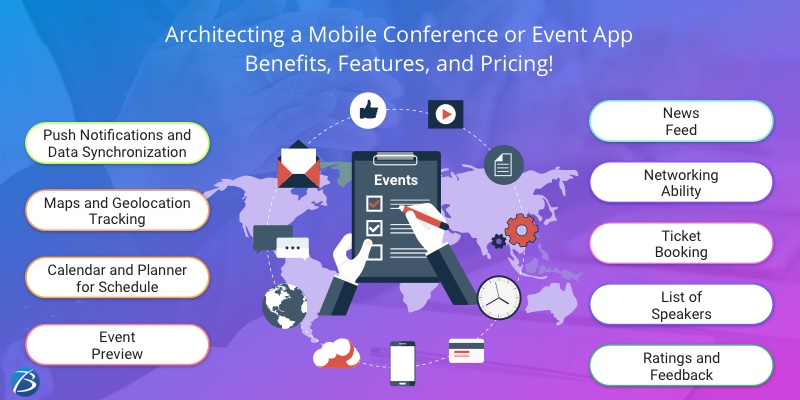
Top-grade Features of the Best Conference or Mobile Event Apps!

Push Notifications and Data Synchronization

Like other apps, push notifications are one of the most useful features available in the event apps too. These notifications help in informing the attendees of the event details well in advance and also remind them a day before the events. Besides, the data synchronization with the server, it enables informing the attendees regarding any modifications in the event program, time, schedule, location, etc. in real-time.

Maps and Geolocation Tracking

This feature helps the attendees to aptly reach the location of the event.

Besides marking the event location in the integrated map, you can also do the following:

  • Employ live directions for assisting the participants in real-time.
  • In case the event is held over a larger area, build an inner map in the event app with different points of interest.
  • Also, try making the geo-location feature work offline for the attendees to use the app navigation even during unstable network connections.

Calendar and Planner for Schedule

It is of utmost importance to display the details of the event program in the calendar and add them to the schedule. This feature is immensely important for users to remain informed of the event. Also, the planner i.e. customizable notification system will ensure that the users won’t miss any program.

Event Preview

Several people will decide on whether or not to attend the event based on the final preview of the event. So, the event preview should include some interesting content that resonates with the target audience and allures them to participate.

News Feed

The basic purpose of every mobile event or conference app is to inform and entertain its audience and ‘News Feed’ can help to do this well. It also helps to keep the users of the app updated with the latest news or modifications about the events or other important announcements. Besides, this feature enables the organizers to share event photos, videos, interviews, ads, etc. for keeping the users excited about the event.

Networking Ability

Most of the time, the attendees are looking for developing networks through an event, especially corporate events. Rather, networking and building contacts are some of the major reasons why professionals attend events. So, the app must allow the attendees to freely connect, chat and share content with others. At the same time, make sure that spam or unnecessary sales pitches are avoided.  

Ticket Booking

This is a powerful feature that can be used for better event planning for participants and monetization purposes as well. The in-built ticket booking feature of the event app saves the participants from the efforts like finding tickets from other sites or offline locations, printing tickets, payments, etc. All this can be done easily through the app.

List of Speakers

For a mobile conference app, it is a must to add a list of speakers, especially when the events are corporate and could include open-air lectures or so. Technically speaking, integrating this feature is not much difficult. A single-screen needs to be added that has the speakers’ details, photo elements, text, social media links, etc.

Ratings and Feedback

Reviews, ratings, and real-time feedback by the attendees are essential for every budding event planner or event app owner. It helps to get insights for improvement of the app as well as particular events that were organized using the app. By using this feature, the participants can chat in real-time with the speakers or experts in the events and rate them too.

Event App Development Cost Considerations

Architecting an impactful event app is no easy task. It depends on a plethora of factors like types and numbers of features to be integrated into the app, location of the development firm, experience of event app developers, app platform, API integrations, app security measures, UI/UX design, devices that the app supports, usage of smartphone hardware, support and maintenance requirements, and much more.

However, here are a few aspects based on which you will be able to get a rough idea about the event app development pricing.

  • Companies offering Event app development services can take 8-10 weeks for creating a good event management app.
  • The hourly rate of developers can range from $20 to $50 or more, depending on the location and reputation of the offshore software company.
  • A simple event app can cost anywhere from $20,000 to $40,000. An app with medium complexity can cost from $40,000 to $60,000 and a full-fledged app with complex features can cost $ 60,000 and above.
  • Additional costs can be incurred for features that are related to attendee engagement, brand awareness, etc.

But every project has individual specifications and requirements. So, if you want to get an exact estimate for your mobile conference app project, get in touch with Biz4Solutions, we will provide you the estimates within 48 hrs.

Final Thoughts

Mobile technologies have advanced to their best capacity and have disrupted the event management industry in myriad ways. Mobile event apps or conference apps have become a must-have for modern-day event professionals. But without the right set of engaging features, these apps cannot provide better attendee engagement, real-time insights of events, and thus, increased business. So, in this blog, we have made an effort to list down those features, with event app benefits and also explained the event app development cost considerations.

Hope this blog helps in making important decisions in your event planning app development journey.

For any further assistance on this topic, comment below or drop us a mail.

Tuesday, July 20, 2021

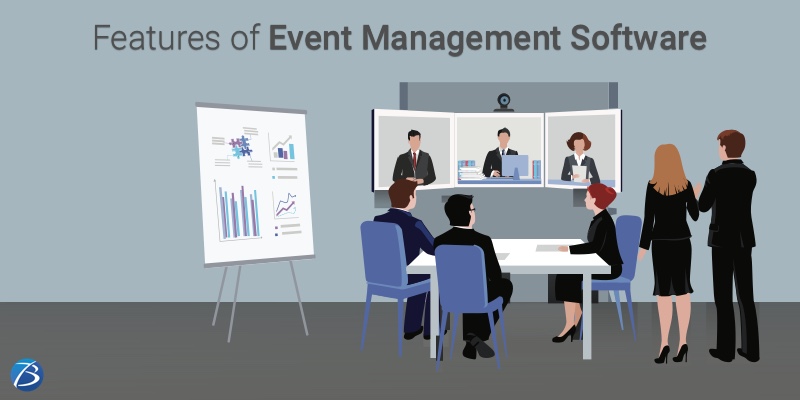
Noteworthy features to consider for Event Management Application

Looking at these sky-rocketing statistics forecasted by Markets and Markets, a top-grade market research company, we can foresee how bright the future of the event app development industry is. Consequently, a wide range of event planners and entrepreneurs are preferring event apps and event planning software solutions to organize the events. Most of these event organizers rope in an Event app Development Company for architecting that perfect app that suits their requirements.

But it is essential to choose such event management software wisely. It is necessary to ensure that the software consists of relevant features that match your business requirements and serve the purpose aptly.

So, this blog is going to shed light on various features of an event app and help budding event planners, start-ups, or even entrepreneurs who already have an event management business to create a customized event management app or comprehensive software. So, let’s commence.

List of Must-have Features of a High-end Event Management Software!

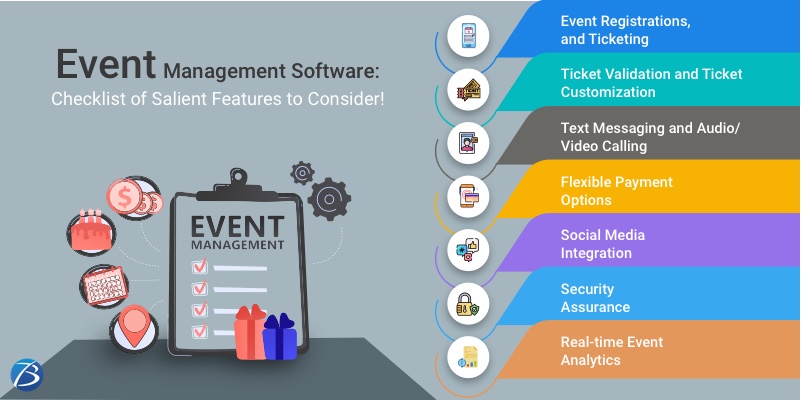
Event Registrations, and Ticketing

Ticket selling generates good revenue and so, the event app or software must be integrated with this feature. The event management software must provide an easy and prompt way for the attendees to register for the events, and book tickets. Also, the ticket prices or other fees should be transparent and visible clearly in the software for the attendees. The software should even allow the users to book particular sessions in case the event consists of several sessions. If there is limited seating available for any event, that should be displayed clearly in the software. Also, the software should enable event managers to list their event tickets easily from the backend.

Ticket Validation and Ticket Customization

Easy validation of booked tickets too is vital for event managers. The event managers should be able to simply scan and validate the tickets of the attendees promptly during the events. Thus, they can avoid long waiting queues before the event starts and avoid messy situations.

Ticket customization is yet another feature, which isn’t a must-have but will help you look different and creative than your competitors. The event management solution should have the feature to customize the ticket designs as per the event theme. For instance, if it is a Christmas Party Event, then the ticket should consist of a Santa’s picture or Christmas tree. Themed tickets are much more captivating.

Text Messaging and Audio/Video Calling

One-to-one messaging, group messaging, and audio/video calling features are a must-have as both- the attendees and the event planning staff need them. The attendees need to confirm if their tickets are booked. They may also need to connect to the event managers or the owners while reaching the venue on event days. And when it comes to the event planning staff, they need to organize several mini-events and instantly connect to their fellow team members now and then. So, text messaging and calling features play a significant role here.

Flexible Payment Options

Offering multiple payment options is vital in an event app. These are required when attendees need to do payments, or owners need to pay the planners, or even when sponsors make their contributions. So, integrating secure, reliable, and well-known payment gateway options like Stripe, PayPal, WePay, etc. is a smart decision.

Social Media Integration

In this digital world, social media is one of the most essential features for any kind of business, and event management is no exception. Using social media, an event management company can ask the attendees and clients to comment on, like, and share their posts, and thus boost the traffic on their pages. The company can advertise its business, promote upcoming events online, attract more clients, connect with sponsors, and much more.

Security Assurance

The risk of hacking and cyber threats can’t be ignored and so, an event management tool should ensure that all the data related to events and conferences are secured through various strategies. The software should have strong data encryption services, and follow GDPR regulations. Also, it should not provide access to any unauthorized third parties or vendors. So, the app-users must be assured that they are safe from phishing attacks, hacking activities, malicious malware, etc.

Real-time Event Analytics

Tracking the metrics like valid ticket registrations, total revenue collected, networking stats, number of apps installed, hits on app or website, conversion rates, etc. are crucial for measuring the progress of event business. These statistics help to make well-thought business decisions and accordingly take actions that enhance the business. So, the event management software must be able to gather real-time analytics and generate intelligent reports accordingly.

A Few Other Significant Features to Consider

  • Discounts, and Promo Codes: One of the smart marketing moves is to provide discounts, promo codes, and similar exciting offers during ticket sales and a good event management tool must support this feature.
  • Automated Messaging: Adding this feature to the event app will save vital time for event planners and somewhat reduce their workload. They will be able to send confirmation emails, event reminders, etc. without much effort.
  • Exposure to Sponsors and Partners: Sponsors and Partners expect proper exposure on social media channels, and also at the event venues. So, the event app should have the provision of adding the data and contact details of sponsors and partners in it, to be easily accessible to anyone.
  • Multi-lingual Support: If an event business is operating across different regions and countries, then it is essential that they provide multi-lingual support and so, the software should possess this feature.
  • Surveys and Real-time Polling: These features act as engagement activities for event attendees. By using these features, it is also possible to understand their mindset, their views, etc., and implement them to improve business.

Final Words:

If you want to become successful in the event management business, then a highly functional event management app or software is a must-have. The right solution with relevant features will not only make the event planning job hassle-free and ease out the coordination but will also ensure attendee engagement on a deeper level. Besides, it will help you gain a competitive advantage over your competitors in this domain.

Below are some important domains we work on:

On Demand

Healthcare

Water