Showing posts with label healthcare app development. Show all posts

Monday, June 20, 2022

What are the Key Challenges encountered by the Healthcare Sector in 2022 and how to address them?

The healthcare industry is ever-evolving to meet the dynamic and demanding requirements of changing times. Factors like emerging technologies, rising patient expectations, the latest healthcare trends, and the discovery of new avenues of clinical treatment are the major driving forces behind the need for transformation. However, this transformative journey brings in loads of bottlenecks that healthcare providers struggle to deal with.

I have penned down the major issues prevalent in the healthcare industry as well as effective measures to address those roadblocks. Here we go!

Key Healthcare Industry Challenges and Remedial Measures

Demanding Patient Expectations

The healthcare service expectations of modern-era patients are sky-high and demanding indeed. The most popular demand that was fuelled up by the Covid19 pandemic is a healthcare service that combines both models – virtual and in-person doctor consultations – depending on the requirement/urgency of patients’ medical conditions. Today, most medical facilities offer the option of virtual consultation in real-time via video calling; but effectively integrating in-person and virtual services is quite challenging. The reason is healthcare professionals find it difficult to decide as to which patients need an in-person visit and which patients can be managed by virtual consultations.

Patients, these days, have got accustomed to the convenience of an elevated experience offered by other industries, particularly the retail sector. Needless to say, they crave a similar customer experience from their healthcare provider as well. Telehealth and telemedicine experiences are the most sought-after healthcare models. Patients prefer a streamlined experience including services like ePrescriptions, online prescription refilling, downloading lab results/immunization records, online appointment booking/rescheduling/cancellation, timely reminders via push notifications, online bill payment with multiple available options, checking of insurance status or account status digitally, etc.

Lastly, patients expect fast and flawless services from the practitioners as well as front-desk staff.

Remedial measures

Healthcare organizations need to employ patient-friendly and effective telemedicine/telehealth mobile apps and also integrate secure and HIPAA compliant software solutions/systems to record patient data and provide access to authorized users as and when needed. For this reason, it is advisable to create a centralized portal that consolidates all patients’ information and clinical data. The patient history should be updated regularly, and the portal must be made accessible to all medical staff to avoid unnecessary delays, clinical setbacks, and fatal diagnoses/treatment errors.

Appropriate Handling of Big Data

The digital tools and software solutions that are adopted by medical practices to record and process patient information and clinical data; generate humungous volumes of handy data known as Big Data. This data can be leveraged by the medical facility in the form of data analytics to obtain amazing patient outcomes – like-saving processes, epidemic control, etc. – and reduce operational expenses. Some of the implementations of Big Data in healthcare include EHR integration, predictive analysis, strategic planning, receiving real-time alerts during emergencies, integrated and personalized communication, advanced patient care/treatment, reducing fraudulent practices, and tightening data security. Big Data can bring a lot to the table for medical companies and provide them with a competitive edge.

But, most healthcare service providers are not able to fully utilize this brilliant strategy. It becomes challenging to capture and use Big Data due to the absence of productive methods for data governance. The data needs to be precise, clean, and formatted properly for effective usage. The hospital body needs to create a conducive infrastructure that allows effective data integration and collaboration amongst data providers. And, all these processes are not easy to implement.

Remedial Measures

In order to reap the benefits of data-oriented decision making and analysis, healthcare Services need to implement an online reporting software. The usage of Artificial Intelligence algorithms and Machine Learning methodologies including neural networks is also a highly workable option for the healthcare industry to handle huge volumes of data and gain fruitful outcomes out of it. For this, you need appropriate hardware and software support and technical professionals to drive the processes. This support system can be either built in-house or outsourced from a reliable and experienced vendor offering healthcare app development services.

Cybersecurity Threats posed by Smart Healthcare Systems

Today, the healthcare ecosystem of hospital spaces has become all the more complex and prone to cybercrimes due to the adoption of a technology-infused digital approach powered by automation, data analytics, and interoperability. Dealing with cybersecurity woes has become one of the key challenges in healthcare.

Check out these alarming data breach statistics as reported by the online portal techjury.net:

  • Healthcare providers invest only 6% of their budget in implementing cybersecurity practices.
  • 24% of the practitioners were not able to identify the commonest signs of malware attacks.
  • 39% of healthcare firms came to know about the data breach several months after its occurrence.
  • 60-80% of healthcare data breaches are not reported at all.
  • The penalty for data breaches in healthcare is approximately $ 408 for each record which is much higher compared to other industries.

Modern hospitals integrate various third-party systems and different types of connected devices into their environment like IoT-powered wristbands for remote tracking, software tools for crash cart tracking, vital-sign monitors, portable X-ray machines, ventilators, etc. These systems and devices interact with the entire network of the medical facility to generate valuable medical data and patient information to be stored in the EHRs. This data helps in patients’ life sustenance, clinical decision making, data analysis, research, and so on.

But every integrated device makes the hospital infrastructure vulnerable to cyber-attacks and data breaches. Such incidents pose a big threat to patients’ health/safety and the security of sensitive healthcare data and medical systems. Take a look at the type of cyberattacks existing in the healthcare sector and their grave consequences.

Different kinds of Cybers Attacks

  • Malware: Attackers block a network, service, or system.
  • DoS (Denial of Service) DDOS (Distributed Denial of Service) attacks: The healthcare devices or systems become unavailable for use.
  • Ransomware: Hackers encrypt data and demand a hefty amount as a ransom for reviving the data.
  • Phishing Attacks: Phishing links or websites are used for misleading the targeted user; if the user clicks on malicious attachments/links, confidential information can be accessed.
  • Cloud Storage Breach: Attackers can access insecure APIs and improperly encrypted PHI and PII data stored on the cloud; they can even misconfigure cloud storage altogether.

The Consequence of Cyber Attacks

Cyber-attacks can lock patient care as well as back-office systems and stop their functioning for a certain period. Whenever any life-sustaining equipment is tampered with, the lives of patients are endangered and can even lead to the death of critical patients. Moreover, hackers can invade information networks and access medical research & clinical trial data, patients’ health information, billing details, etc. This data is then sold on the darknet for carrying out fraudulent practices. Medical facilities can be heavily penalized or fined for security breaches and healthcare information leaks, specifically if they have violated the standard regulatory compliances mandated for the healthcare sector. Such incidents tarnish the reputation of healthcare brands, and they start losing customers.

Remedial Measures

Healthcare Providers must secure their infrastructure, databases, networks, and endpoints and protect the private and financial data of patients. So, make sure that every third-party technology integrated into your system is secured and is HITRUST certified, adhere to all regulatory compliances including HIPAA, encrypt data, restrict access to systems without proper authorization and authentication, follow a multi-factor authentication procedure, and implement a strong password policy. Also, regularly update systems to patch security threats, train hospital staff about cybersecurity risks, strictly monitor digitally connected devices to identify intrusions, and be equipped to promptly resolve security breaches. Practices like duplicate encryption, network fragmentation, firewall, risk scans login testing, etc. are also highly effective in maintaining data security.

Issues in Processing Invoices, Payments, and Insurance Claims

The healthcare industry is struggling to streamline payment processing; several medical providers still follow time-consuming and error-prone manual processing cycles. This leads to late payments, missed payments, added operational expenses, and claim denials by insurance firms due to minor errors. Patients also miss the chance to use digital payment alternatives such as virtual cards that enables them to avail of cashback discounts.

Remedial Measures

Healthcare providers need to automate and streamline the entire invoice and claims processing system. Automated capturing of data and coding will speed up the process, minimize errors, lessen claim rejections, and reduce the workload of medical staff.

A feature-rich billing system built in collaboration with the billing firms will ease things for patients. A patient-centric billing system usually comes with handy functions like an online patients’ portal, a flexible dashboard for managing invoices, separate queue screens for IP and OP billing, eStatements, multiple payment alternatives, latest payment processes like text-to-pay, etc. An efficient mobile solution will also send auto payment reminders to patients through push notifications.

EndNote:

Automation and technological innovations in healthcare are a double-edged sword. While technology and digitalization are a boon to the healthcare sector and can solve endless roadblocks, it is challenging to integrate such solutions, and myriad bottlenecks crop up if this software is not properly implemented.

Does that mean that healthcare providers should stay away from digital transformation and lag behind competitors? The answer is a big “no.” Medical service providers must embrace a technological approach, but follow the best practices, regulatory compliances, and security measures to eliminate challenges.

Thursday, May 26, 2022

All-inclusive Guide on Hiring Healthcare App Developers!

The ever-increasing patient expectations, the emergence of innovative technologies, and tough competition amongst healthcare service providers have fuelled up the need for healthcare digitalization. And, the rapid adoption of smart medical equipment and software solutions by medical facilities has given rise to the trend of hiring healthcare app developers.

However, hiring developers for tailoring a suitable app/solution for your medical practice is not as easy as it sounds. While the right solution created by skilled developers can bring a lot to the table and boost your ROI; the wrong development methodology or a single developmental error can lead to huge disappointments, costly rework, and heavy losses. Hence, you need to choose your healthcare app development team with care.

This post provides you with all-inclusive guidance on hiring the right set of developers for your upcoming healthcare app development project.

Healthcare App Development Strategy: In-house Team or Freelancers or Outsourcing Agency?

In-house Team

If you plan to engage an in-house team of developers to build your healthcare software system, coordination will be outstanding. But you will face issues like high infrastructure & administrative costs, a limited talent pool, and loads of time and effort on team management.

Freelancers

Hiring freelancers may be the cheapest and most convenient option as it rules out any hiring hassles. Nevertheless, freelance developers are not so reliable and are likely to back out of the project mid-way, leaving you in deep waters.

Outsourcing Agency

Outsourcing software developers or development companies is the most popular and profitable approach as it comes with countless benefits. This approach allows you to choose from a wide range of talented healthcare app developers from across the globe, flexible hiring models like the pay-as-you-go option, more experienced teams, end-to-end product development cycles, and many more. Moreover, the Healthcare provider can entrust the IT development responsibility to partner firms and focus on their core industrial operations. Here, you get an entire development team or independent developers depending on your requirement.

This approach too has minor downsides like communication woes, time differences, and language barriers. But these issues can be easily avoided if you pick an experienced healthcare app development company with a good track record, maintain transparent communication throughout the development process, and enter into contractual agreements beforehand.

Hiring Healthcare App developers: Generic Factors to Consider

Background Research

Check the credentials, previous work history, and client feedback of the outsourcing vendor agency or healthcare app developers you have shortlisted. This can be done by visiting the software company’s website and checking their offerings, case studies, client reviews, etc.

Renowned online business listing platforms like Clutch, GoodFirms, etc. can also provide you with important information about the expertise of a healthcare app development vendor agency. These platforms display the profiles of numerous software companies mentioning their niche, client testimonials, awards and recognitions, project references, etc. Online platforms like Upwork provide information on thousands of skilled freelance developers and agencies around the globe.

Technical Expertise Validation

Extensive experience, innovative ability, talent, expertise, and the right skills as per your requirements, are the necessary prerequisites to look for in healthcare developers. You can prepare a questionnaire for validating their technical skills.

Agreement on SDLC and Signing of NDA

If you are hiring outsourced assistance, clarification on the SDLC and signing an NDA is essential during the project discussion stage.

You need to clarify which SDLC (Software Development Life Cycle) model will be used, the experience & expertise of developers who will be allocated to your project, and the tentative turnaround time for each stage of the SLDC. Usually, an agile development methodology is preferred over other models as it has turned out to be the most productive strategy around the world so far.

Signing service level agreements like an NDA (non-disclosure agreement), with the healthcare app development company or developers to whom you are outsourcing the project, is mandatory as per the HIPAA guidelines. An NDA is also crucial as this contract seals and legalizes the partnership agreement. You must also discuss and agree upon certain factors like payment timelines, the token amount, and payment terms and conditions prior to the commencement of the project.

Must-have Skillsets to promote Healthcare Interoperability

Semantic vocabularies

Semantic vocabularies are necessary to maintain the syntactic standards needed for seamlessly interpreting clinical data, and so, healthcare app developers must have some prior experience in working with the commonly used semantic vocabularies including LONIC, ICD9/10, SNOMED-CT, and RxNorm.

Healthcare Integrations

Interoperability between various apps, systems, and devices is a crucial prerequisite to regulating clinical workflow in the healthcare environment. And, interoperability can be successfully achieved by integrating frameworks in the right manner. Hence, healthcare app developers must be well versed in the frequently used medical frameworks such as Integrating the Healthcare Enterprise (IHE) and HITSP (Healthcare Information Technology Standards Panel).

Developers must also possess knowledge of the popular interoperability standards adopted in the realm of Healthcare technology. The most popular interoperability standard is the level- 7 2. X; other notable ones include HL7 v3CDA, ANSIX12n5010, DICOM, and NCPDP SCRIPT.

Necessary Technical Knowledge and Skills

Third-party Integrations

Large-scale healthcare services often need to partner with third-party providers and utilize their solution platform to efficiently manage their entire workflow. The most commonly used third-party integrations include in-app chat, payment APIs, in-app calling, etc. If these integrations are not executed properly during mobile app development, the app’s UX gets adversely affected. As such, the healthcare app developers whom you pick for tailoring an app or solution must be thorough with third-party integration standards like SOAP, HL7 FHIR, and REST framework.

API Development Capabilities

Most healthcare app projects involve API development. API components need to be added for authenticating a device to gain access to the central patients’ repository.

So, the healthcare app developers must possess sound knowledge of commonly used SQL databases such as PostgreSQL, MySQL, etc., and NoSQL databases such as Apache Cassandra, MongoDB, etc. Developers must have expertise in developing the RESTful API, REST (Representational State Transfer) being the standard development practice. The development team should be able to build effective API endpoints and create highly workable rules for API requests and API responses. Programmers also need to know the standard practices used for ensuring API security like encryption, the usage of safe API gateways, etc.

Cutting-edge Technologies

Healthcare app developers must have the necessary expertise in working with modern technologies. The most relevant technologies employed for building a healthcare app are IoT, Blockchain, and Artificial Intelligence.

IoT automates the workflow of a healthcare facility, enables remote health tracking, improves interoperability, and facilitates medical data exchange. It also drives the functioning of smart devices like wearables that are an integral part of telehealth apps and remote patient monitoring. 

AI has entered the healthcare industry as machine learning algorithms are increasingly being used for ushering in advanced automation and improving the efficiency and accuracy of healthcare functioning. Blockchain technology ensures security while health record sharing helps research scholars in genetic coding, and improves the efficiency of medicine supply management.

Essential Soft Skills for Healthcare App developers

1. Revenue Cycle Workflow

Healthcare app developers have to provide a clear picture to their clients on the working of the revenue cycle workflow. So, developers must have extensive knowledge about how the elements in a healthcare organization’s revenue cycle workflow function.  These elements include payment models, billing schedules, denials workflows, etc.

2. Capability to guide the Client in Planning Productive Strategies

The development team is expected to guide the client through the planning process. For this reason, the professionals should possess sound interpersonal skills like being able to comprehend dependencies, interoperability requirements, etc., and strong communication skills to convey those requirements effectively.

Recommendation on implementing effective app monetization strategies is of utmost importance as this will add value to your investment. Developers should be able to suggest the most reliable and productive monetizing strategies for optimum benefits.

 3. Awareness of Healthcare App Security Standards and Regulatory Compliances

The privacy and security of data are of utmost importance as the healthcare industry processes sensitive patient data and medical information. Therefore, security measures need to be adopted during the software development process itself. So, the developers must be aware of secure coding practices and the latest data encryption tools like next-generation firewalls, antivirus, etc. The other standard practices that developers need to know are implementing multi-factor authentication along with password protection, adopting measures to eliminate security threats like broken authentication, injection, etc., and incorporating “Compliance-as-Code” for conducting security and compliance testing in the CD/CI pipeline.

Furthermore, healthcare apps and solutions need to comply with several standard regulations like HIPAA, etc. mandated by the US government and other regulatory authorities. Developers must be well versed in these standard regulations so that they are able to effectively implement these during app building.

Bottomline:

The aforesaid practices are winning strategies for hiring Healthcare app developers. You need to team up with the right software development firm that will deliver your project timely without compromising on the product quality, identify issues instantly, and resolve bugs at once. Also, look for developers who have the necessary knowledge, understanding, technical expertise, and experience as per your project needs.

So, it is advisable to pick an IT agency that will take care of the entire healthcare app product lifecycle starting from app ideation to maintenance post-deployment.

Monday, April 25, 2022

Noteworthy Features of Therapy Mobile app!

Do you consider mind over matter important? As the saying goes, you should control your mind before it controls you. Most of us have finally grokked that talking to a friend can be an enormous help. Post pandemic era, the general rise in the wide awareness about mental health has led people to take therapy. Though a little unconventional, people prefer secretly talking and consulting with a therapist privately. That is the reason why there are so many therapist apps popping up on the market.

Therapist apps provide you with the privacy you seek. Not everybody can find a suitable person to vent out their feelings. When you are in emotional chaos or crumble under problems that are too complex, it is equally difficult sometimes to find a trained mental health professional. So therapy apps help a lot to take you out of an emotional pothole. Therapy apps let you find someone having the expertise to speak to via mobile phones, formal text, or video. These kinds of effortless connectivities are like godsend for some. For some people, it can be additional support to in-person therapy and for others, it can stand alone. And the best part is these platforms are curated to have security and privacy in the conversations.

From a teenager to an adult, everybody can indulge smartly and securely to practice mental well-being. For teenagers, it may feel weird to spill your guts into a face on your mobile phone, or for people with disorders such as depression and anxiety, or women having issues with the quality of life secondary treatment, neglect at home, domestic violence, etc; therapy mobile apps add a whole new avenue to speak up about these issues. It’s not that everyone with a smartphone cares for their mental well-being. Often, people pay attention to their physical health and they do regular exercise, eat nutritional food, take a good sleep, and stay hydrated. Just like your physical health, support for your mental health helps you feel your best and up in arms.

So, these therapy apps have a universal demand. According to the report published in reachandmarkets, The Global Mental Health Apps Market size is expected to reach $10. 2 billion by 2027, rising at a market growth of 16. 3% CAGR during the forecast period.

Many mental therapy apps are effortless to use and help you secure the well-being you deserve via their features. Many mental health apps can give you suggestions, tools and advice, mindful activities, and support to help you manage your stress. Some apps effectively manage general mental health issues and complex conditions. Many of the apps are free to download but these free apps provide access to only limited features. To access all of the features of an app, user needs to go for paid subscription.

Best Features to Have in Therapy Apps

Seeking help from therapy mobile apps can be intimidating but the real challenge is the real-time problem-solving capacity via its features. So, here is the list of some real-time practical features that can help to boost the productivity of the therapy apps.

Profiles Creation

First things first. Profile creation is an absolute initial step of building a therapy mobile application to sign-up and the profile creation feature. The sign-up step should be hassle-free and should not create anxiety for the users. Guaranties of the data and content that the users are putting in may give them an extra sigh of relief. Profile content should be separate for counsellors and patients. If the counsellors are ranked according to experience and feedback then it would minimise the struggle to find the right counsellor for patients. Most important thing is that profile settings should incorporate all the necessary data for utilizing the application like full name, region, age, location, gender, disorder, chronic illnesses, allergies, intolerances and so on. The patient should be given the option to upload all their prescriptions and documents, and reports on their profile.

Calendars and Reminders

One of the great advantages of mobile devices and the digital age is that it has simplified orderly living and eased the burden on people. With this feature, patients can easily book appointments with counsellors, set targets on the app and accomplish tasks on the dashboard. Calendar features can also be helpful beyond measures for female health tracking. This coupled with reminder features may boost your productivity and timely execution of the tasks you have subscribed to. So day by day, in every way, users would be growing. With reminder features, from teenagers to elderly patients, users can set reminders for their medicines. It is helpful for people suffering from Alzheimer’s, anxiety or depression.

Variety of sessions

Apps are imperfect if they are not easy to use. Many mental therapists suggest that having a suitable session is a must as people have different and complex sets of mental issues. So to do justice to everyone’s problems, therapy apps should come with a wide variety of sessions like mindfulness, music therapy, talking sessions, etc. The add on features like meet and greet with the favourite therapist will add a game-changing solution.

Tracking self-growth

Tracking and self-monitoring the progress is one of the essential components of mental therapy. For this, therapy mobile applications can be useful to monitor complete well-being from day to day or month to month basis. Features like this are very handy to keep updated records of the sleep cycle, mood alterations, mental disorders, food intake, tracking metabolism and physical exercise, thoughts, sentiments, and so on. With an active dashboard that keeps on updating these indicators automatically, users can analyse information hustle-free or even refer them to their therapy counsellors. Other features like calendar, events tracking, and manual goal setting can help the app grow more.

Counselling via chatbox and video sessions

While the whole world was in quarantine, video calling and group chatting were the main channels by which the people managed to keep a visual and live check on their loved ones. But these features are proving to be a blessing post-covid era. Telehealth services have sprung up from the covid-19 stage. Its usage was much higher during covid-19 and even now it is 38x higher than in the pre-covid stage. From gym instructors to therapy counselling, the live video sessions are the new normal. That is the reason it is important to add chat and video meeting features when you want to build the therapy mobile application. It can increase the app engagement along with the user and counsellor connection. Other features like screen sharing, documents transfer and media sharing might double the user interaction and usage across this platform. Along with that, you can even add other features such as video recording, screen sharing, document transferring and so on to make the therapy sessions more interactive.

Video & Audio Content

If somebody asks you whether you like to watch a session or read about a session, then most of the time you would choose the first option. This feature can do wonders when it is unable for users to reach out to a counsellor. Video content is engaging, explanatory, creative and very satisfying when it comes to engagement with the audience. People are more used to listening to podcasts, video meditation and other blissful features. It is very beneficial for return on investment as it enhances your mobile app engagement. The use of video monitoring can go beyond the expectations as it can alter the mood and instructive session also helps to get rid of anxiety and loneliness, unwanted stress, and so on. Likewise, patients and counsellors can upload video and audio files from their therapy sessions on the off chance that they need to watch them once more. Users can easily scroll through the playlist and watch the content as per their needs.

Urgent Care

 For a person suffering from mental health issues, anxiety and depression-like attacks are common. If a person is having an anxiety attack or suffering from any mental disorder, then urgent care can be a godsend for them. So, now and then people having mental health disorders require urgent care. You can list the symptoms of any such panic attack and in this way, you can build an app that creates awareness. It’s a great way to build a self-care routine for users. With an urgent care feature users can get admittance to a quick emergency assistance call or somebody from an experienced counsellor.

Furthermore, you can add step-by-step directions on how to respond if there should arise an occurrence of urgent care and a tab with quick access to required contacts with a simple video tutorial or audio clip.

Sharing Data

We have learned the hard truth that sharing is caring in the pandemic. Beyond sharing the useful things, sharing thoughts, and results can push other patients to do more better. Therapy mobile apps can also let apps sync with social media accounts and share their progress, ideas, and thoughts across various social media platforms. Peer to peer connectivity can let them send data directly to their counsellor or required trained professionals and their loved ones. Add some ‘how you feel’ and ‘mood’ feature on social media platforms and it can let the users share their progress that can motivate other users as well.

Active Push Notification

Remind users and patients how well they are doing and how much more they can accomplish with push notifications. These kinds of notifications increase app interaction and also alter the patient’s mood. Such alerts reminds the users to keep their mental health in check. For the day, patients can be reminded and motivated to do work out, practice meditation, read blissful information, practice relaxation, inform about therapy sessions, energize and brighten up their mood, and so on. A good engagement with content can help patients to indulge more and more in the application. So this is a must have feature for mobile app development.

Protection from data theft

Though the digital age is a blessing, it also is a bane. Many spyware attacks, bugs and hacking tools have changed the virtues of safety and security while using digital devices. A person suffering from a mental disease should be more careful as any such security breach might create extra anxiety and stress on the patient. So, being careful about data security is a must when you build a mobile app. The therapy mobile app will have all the sensitive details about the patients and counsellor which a mobile app developer should protect at any cost. Some high-level security features like multi-factor authentication, dynamic password, biometric authentication, voice recognition, OTP verification, etc. can assure the needed security.

But remember, apps are not a substitute for professional mental health care. They can ease your way to achieve your desired targets and goals efficiently.

We at Biz4Solutions, know how to push buttons and get your business going. As a leading Healthcare app development company, we can help you create such amazing applications for mobile devices. From blockchain and IoT to healthcare, we have successfully brought a smile on many faces with our quality services. We are pioneering mobile app developers and bring not just the conventional solution but also offer smart ways to upgrade your business and increase the productivity of your business. It’s your time to say YES! Allow us to help you with Digital transformation, robotic process automation, IoT, cloud solution, mobile apps and many more state-of-the-art services. Drop your email in the comment box and relax, our experts will get in touch with you shortly.

Tuesday, December 14, 2021

Trending Patient-centric Healthcare Apps!


Innovative digital trends are giving rise to amazing healthcare applications that not only deliver a unique patient experience but also focus on patient satisfaction and meaningful patient engagement. These healthcare apps come with a promise of speedy access, less paperwork, enhanced convenience, secured payments, and improves productivity, healthcare records management, appointment management, etc., Such apps are beneficial to patients as well as service providers.

Let’s explore the offerings of some of the most trending patient-centric healthcare apps that every healthcare app creator must know!

Trending Patient-centric Healthcare Apps


Check out some of the most popular healthcare apps across various niches!

Doctor-on demand Services

Teladoc

This on-demand telehealth app provides instant virtual care in case of injuries and medical conditions that are not life-threatening. Using this app, individuals can avoid a doctor visit for minor ailments that can be easily resolved via video/telephonic communication. Once, users register themselves with the app and then furnish insurance particulars, they are informed about the services available to them as well as the charges involved. A basic charge of 75$ is levied for daily appointments in the case of users without an insurance policy.

Amwell

With Amwell, users get a convenient as well as an affordable option for resolving routine healthcare conditions that do not require an in-person visit. Amwell makes use of advanced technology to arrange for an online doctor visit through their mobile app or website and provides 24X7 services.

Once users log in, the app displays a list containing board-certified practitioners available within Amwell’s network. Then the users can discuss their health problem with the desired doctor using an on-the-spot video chat facility. These physicians answer queries, recommend treatment plans, and prescribe medication if required.

Apart from on-demand medical services users can also avail themselves of other healthcare services like nutrition advice, pediatric care, psychiatry, therapies, and many more. Though this app can be downloaded for free, charges apply for most of the services provided. But, if a patient’s health insurance covers Amwell services, the fees are either reduced or waived off completely.

Treatment /Monitoring

Eye Treatment: EyeCare Live

With this smartphone app, users can connect with eye specialists for consultation and advice; through advanced communication channels. This app is recommended for minor conditions like eye allergies, dryness or redness in eyes, any queries concerning contact lenses, etc. The users are asked to record their eye condition by clicking pictures or recording videos of their affected eye/s. Then, this picture/video is examined by a practitioner. High definition videos are used for this purpose so that the doctor gets a better understanding of the condition and is able to resolve the issue at the earliest.

The app connects users with a virtual eye doctor within an hour and allows users to renew prescriptions that are less than 2 years old. This app can be downloaded free of cost, but charges have to be paid for virtual doctor consultations and eye tests.

Customized Acne Treatment: MDacne

Earlier patients had to undergo long waiting times for obtaining a dermatologist’s appointment. But, with MDacne, users enjoy the facility of immediate access to dermatologists. The app comes with an outstanding UI and is easy to use.

The app provides a treatment plan as per the users’ skin type within five minutes of inquiry and works wonders in the realm of acne treatment. MDacne monitors skin conditions employing cutting-edge technologies provide productive recommendations, initiates a chat with dermatologists, and sends treatment reminders to patients. Besides, the app provides natural remedies for acne issues like skin redness or scarring, to patients who do not prefer chemical treatments.

The patients need to upload pictures of their affected area and answer certain questions regarding their skin. The app examines the skin within a few minutes and suggests treatment plans that can be tailored as per the patients’ specific needs and delivered to their doorstep.

Dermatology: First Derm

First Derm is a dermatology app designed to address external skin conditions. Users need to click two pictures of the affected area – one close view and another taken from a distance. These photos, along with a description of the issue provided by the users are sent to a licensed dermatologist who responds within twenty-four hours of receiving the snapshots and provides users a solution for their problem. The consultation charges for each case registered for doctor examination are 40$.

First Derm also offers an AI-powered service that helps users to identify a skin problem without consulting a dermatologist. The users need to upload a picture of their skin problem and then AI technology matches the image to all possible skin conditions

DNA/Nutrition

Generis

This is an avant-garde healthcare app that provides DNA-based advice, and recommendations concerning food, supplements, nutrition, fitness, etc. The app is capable of retrieving DNA-based data from 23 and ME and Ancestry.com. Its interface is pleasing as well as user-friendly. With this app, individuals are able to understand their genes and obtain actionable steps to follow that are secure and accurate as well. This way, users are educated to become the best version of themselves.

As the efficiency of burning energy differs from one individual to another, Generis employs a formula for rolling out the best-suited personalized suggestions for its users. This formula is prepared by genetics experts after considering over fifty markers that have positively impacted wellness. Furthermore, each claim made by Generis is backed by scientific evidence contained in peer-reviewed journals.

Medication/Prescriptions

Medication Reminder: Medisafe

With this app, users receive notifications on their smartphones regarding the intake of medicines. Medication reminders are so accurate that they notify patients of the exact time at which a particular medicine needs to be taken. Patients can manually add prescriptions and non-prescribed supplements like vitamins, or import prescriptions from renowned pharmacy chains like Rite Aid, CVS, Walgreens, etc.

Medisafe can also be utilized for tracking medication refills/measurements, receiving coupons on future prescriptions, and accessing resources as per their health condition.

Lowest Medication Prices: GoodRx

This app helps individuals to save expenses incurred on prescriptions. The GoodRx allows users to find the pharmacy that offers the lowest price for a particular medicine. The users need to search on the GoodRx app or website and are provided the option to select from over 75,000 pharmacies located in their area of residence. The price-tracker functionality allows consumers to observe prescription prices within their area and compare them with other pharmacies. The “coupon finder” feature automatically searches if there are any free coupons available for a specific prescription. Once, identified, users can activate the coupon using a button called “Get Coupon” and then avail of the benefits while collecting their prescription.

Therapy

Talkspace

This app offers to counsel regarding mental health problems such as depression, anxiety, addiction, eating disorders, LGBTQ, PTSD, etc. to individuals who do not have the resources or time to access in-person counseling. This digital therapy platform has roped on 2,000+ licensed psychiatrists and therapists offering private therapy services. The app matches and then connects users with their desired therapist via communication services like video/audio, unlimited text messaging, etc. Premium users can avail themselves of live online sessions as well. Users are recommended medication or treatment plans if needed.

Patient Portal App

MyChart

This patient portal app, allows individuals to avail of doctor communications, online appointment scheduling, and access their electronic health records. With this app, patients can have a look at their diagnostic test results, immunization history, prescribed medicines, and other healthcare records. These records are displayed on the screens of their computer/tablet/smartphone.

Patients can effortlessly schedule appointments as well as make payments for services using its features concerning bill payment and appointment scheduling. Moreover, users can utilize this app for connecting to their practitioners and sharing healthcare records from other doctors. Furthermore, with the usage of an activity tracking app, one can transfer their fitness/health data into his/her MyChart profile.

Diabetes Tracking and Management

Diabetes:M

This app assists diabetic patients in tracking/monitoring food intake and managing their glucose levels, insulin levels, injection sites, etc. Users can store their health data and receive detailed reports that can be then shared with doctors. The pro version allows users to create an additional profile and also connects users to their Bluetooth-empowered monitoring device.

MySugr

This app enables users to instantly track their blood glucose levels, bolus, carbs as well as estimated HbA1. Individuals need to log their healthcare data on a regular basis and this practice has helped them to manage diabetes in a better way. Moreover, physicians can review this data for treating their patients more effectively. Besides, MySugr provides motivating challenges to users coupled up with feedback on how to manage Type1/Type2 diabetes.

Concluding Lines:

Aren’t these game-changing apps amazing? If you too would like to architect such incredible patient-friendly healthcare apps, get in touch with Biz4Solutions, a prominent healthcare mobile app development company, having a rich experience of 10+ years in tailoring top-notch solutions for global clients. Check out our ready-to-use pharmacy delivery app as well.

To know more about our core technologies, refer to links below:

RoR App development Company

PHP App Development Company

Flutter App Development Company

Friday, October 8, 2021

How RFID Adoption has Influenced the Healthcare Domain?

Radio Frequency Identification (RFID) technology and its rising implementation in the healthcare domain has proved this technology to be a favorable asset to medical facilities and hospital bodies. The RFID technology offers promising benefits like real-time traceability, communication, identification, etc., thus, helping organizations to save vital time and money. Besides, the healthcare app development services leverage this technology to build advanced solutions that ensure patient and asset tracking, patient safety, enhanced quality of care, and more.

There is a lot to talk about how RFID is transforming the healthcare industry and in this post, we will provide insight on how healthcare app developers and healthcare companies can benefit from it.

Use Cases of RFID Technology in Healthcare

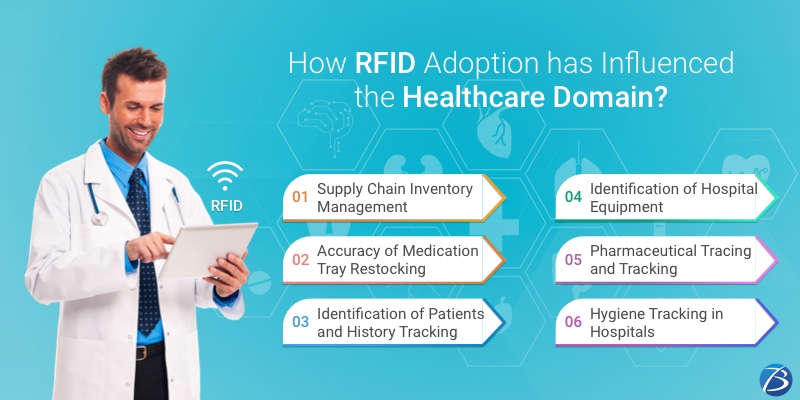
Supply Chain Inventory Management

RFID systems enable better inventory visibility, utilization, and accuracy in healthcare facilities. They reduce product expiration, wastage, and shrinkage to some extent. They help in reducing equipment and supply chain costs. Also, in some cases, certain RFID solutions like automatic inventory tracking systems decreased the time spent on searching and shipment of products to just 5 minutes, which used to be three hours if done manually.

Accuracy of Medication Tray Restocking

Using the RFID solutions, the time for daily medication tray restocking could be reduced by 15 minutes/tray.

Identification of Patients and History Tracking

RFID technology helps in patient identification when an RFID band is tied over the patient’s wrist. The band carries all the health data of the patients like their name, medical history, reports, allergy details, etc. This crucial data is useful to doctors while treating the patient.

Besides, RFID prevents wrong-site surgery, allows patient care auditing, provides automatic billing, and also decreases long wait times.

Identification of Hospital Equipment

In the operation theatres, there are several life-saving equipments used, and inspecting them is mandatory for avoiding any sudden breakdowns. In this case, too, RFID asset management systems prove beneficial as they monitor the equipment and inform the concerned personnel of its expiry.

RFID helps in completing the UDI requirements. Also, it helps to enhance CAUTI outcomes through automated asset tracking and avoid any additional purchase of equipment.

Pharmaceutical Tracing and Tracking

RFID solutions facilitate effective recall management. The RFID asset tracking and management systems can manage the drugs, other pharmaceuticals, and products like gloves, masks, syringes, etc. in hospitals by tracking the available stock and making the concerned person aware if there is any shortage. This also reduces the expiry and wastage of the products.

Hygiene Tracking in Hospitals

RFID solutions can be utilized for improving hygiene tracking practices in hospitals. These prevent hospital-acquired infections. This is so because continuous monitoring is quite an unrealistic approach when it comes to hand hygiene compliance. RFID-based continuous and real-time automatic hand hygiene recorders enable the medical facilities to record compliance that could lack when a direct observer is involved.

Some More Applications of RFID Innovation in Healthcare

  • These systems also allow real-time tracking of the hospital staff dispersed across various patient care environments. This provides insightful information especially for larger and busier hospital bodies for tracking the overall productivity.
  • RFID solutions allow the hospital to track the temperature of heat-sensitive medicines and drugs throughout the supply chain and take the essential steps for maintaining compliance and standards.
  • RFID-based proximity cards provide a secure and seamless way for the staff or concerned personnel to access certain areas within the organization as they do not need to remember any PIN codes while entering the area. These cards do the job well.
  • If RFID proximity cards are utilized along with an output management software, it can decrease the paper consumption and related costs to a great extent through secure input printing for your medical facility.
  • RFID tags can also be used for tracking mobile assets in the hospitals like patient beds, wheelchairs, etc.
  • RFID data can be stored online and it can be shared and managed online too. A battery-driven active RFID, like infrared and ultrasound, is equipped with the infrastructure that makes use of WiFi for communicating data to important medical systems like asset management apps, EMRs, etc.

A Few Drawbacks of RFID Tags and Systems in Healthcare

  • For using an active RFID system in the hospital, the antennas and readers need to be installed throughout the hospital so that they could work in real-time. But this can be a bit tedious at times.
  • Installation of active tags could be very expensive as a single active tag may cost up to $30. Comparatively, passive tags are less expensive.
  • Passive RFID cannot track in real-time. So, the medical facilities should use them only when real-time tracking isn’t required.
  • Active tags come in bigger sizes and need more maintenance because their batteries require to be changed often.
  • Another drawback of an active tag is that it can operate only over WiFi. The tags that aren’t in the WiFi range will not be detected, won’t prove much useful for the hospital processes.
  • Owing to the maintenance needs and high prices of active tags, they are usually employed only in costly mobile assets or complex patient processes like staff monitoring, infant security, etc.

Final Verdict:

RFID technology comes with a huge potential to assist medical organizations, hospitals, clinics, pharmaceutical producers, biotechnology companies, etc. Besides this, the RFID innovation has opened new doors for enhanced operational efficiency, better security, and improved cost savings by tagging stocks, patient data, personnel records, and other assets.

However, despite providing so many advantages, the adoption of RFID technology has not yet taken up speed in the majority of healthcare facilities. As of now, these systems are being used in countries like the USA, Japan, UK, France, Spain, Italy, etc. But, this revolutionary technology needs to be implemented furthermore.

That’s it for now.

Hope it was insightful.

Please comment below to share your thoughts on the aforesaid topic.

To know more about our core technologies, refer to links below:

Node.js App Development

WordPress Web App Development

Flutter App Development

Monday, September 13, 2021

The Future Visions of Healthcare in Home Sector: Top Trends for Startups to Employ!

It is interesting to watch how the healthcare sector has evolved over the years. In the 1950s, physicians and doctors would make calls to the patients for delivering the best possible healthcare services to them. And today, in the year 2021, this trend seems to have returned where the doctors and physicians are reaching out to the patients, for providing them the best patient experience.

Moreover, the home care providing industry is growing leaps and bounds in the United States. The top reasons behind the revenue growth of this industry are the aging population in the US, rising acceptance of home care, the prevalence of chronic health conditions, technological advancements, etc. Home care also saves a lot of costs as compared to hospital care treatment. Needless to say, the future of the healthcare sector is going to be much more patient-oriented and going to save much more lives than ever.

Here are some predictions by Deloitte, on how will the future of healthcare look like in the coming years. 

  • Healthcare practices will start shifting from treating illnesses to prevention and patient well-being.
  • Patient engagement and their empowerment will give them a sense of ownership of their health.
  • Interoperable data and related platforms will allow vital medical data to flow freely yet securely for insightful decision-making.

These predictions depict that technology is going to advance the healthcare systems in myriad ways. Besides, startups and healthcare app development agencies will accordingly design their healthcare products. New trends will come into the picture and these startups and development services will have to accustom to those trends. So, let’s have a glimpse at some of such future-oriented trends.

The Future Visions of Healthcare Sector: Top Trends for Startups to Observe

Aging Patients and Home Care

According to a survey, 3 out of 4 adults of the age 50 or above would want to stay at their homes and with people of their community. As per another survey, almost 10,000 Baby Boomers are crossing the age mark of 65 years in the US; Baby Boomers are those people born between the years 1946 to 1964 and they have a considerable impact on the US economy. Besides, the number of people aged above 65 years will cross 18% of the total population, by the year 2030.

So, it is estimated that home care will be in high demand in the future. To support this statement, there is another report which predicts that by 2024, the U.S. home care market could cross $225 Billion, which was $100 Billion in the year 2016. So altogether, this is a great time for budding entrepreneurs and startups to leverage this opportunity to design apt on-demand health care app development solutions that can bridge this health care gap to offer superior medical services.

Doctors Connecting with Patients

This is the era of serving the consumers on-demand at their desired location. This holds true for the healthcare sector too. Doctors connecting to the patients and taking house calls is going to be the new norm and it is going to be the future of all kinds of healthcare entities. There already have been some medical applications in the market that offer features like audio/video calling and digital monitoring services. MeetYourDoc is one such telemedicine app. It allows patients and doctors to connect through video sessions for remote treatments.

Also, there are some other applications that are trying to bring at-home care to several patients. Phlex65 is one of the best HIPAA compliant apps meant for both- aged people and care providers. Older people can hire at-home care providers from nearby areas through Phlex65.

Telemedicine and its Convenience

Telemedicine facilitates patient monitoring using a smartphone or tablet or PC and helps the patients get medical help without moving to a hospital or a clinic. Telemedicine is a technology-driven approach that is serving millions of patients, especially in rural areas where there is a scarcity of medical facilities. Not only rural patients but owing to the current pandemic situation, even urban patients have started preferring telemedicine facilities. With just a click of a button, patients can avail these services and avoid long wait times in hospitals, or get rid of the traveling time and cost. So, the telemedicine industry, too, is growing at a rapid pace and every healthcare app development company in USA must consider this as an opportunity to grow their business.

Final Thoughts

Future visions of the healthcare domain clearly notify that ‘personalized treatment’ and ‘remote care’ are going to be the new normal, and to some extent, they have already been implemented by many care providers. With the advent of digital healthcare technologies, a plethora of mHealth apps and healthcare management systems have been designed to deliver the best-in-class patient experience and provide personalized services to them.

Furthermore, these healthcare systems and services drive actionable insights into the health conditions of patients, improve communication between patients and doctors, and provide the patients all the information about their health. So, it is essential for the startups to keep a keen watch on all such trends and accordingly design their healthcare products or offer healthcare app development services.

That’s it in this post. Hope it provided you with some thoughtful trends and ideas.

If you want more details on how this sector is advancing, reach out to us. Our professionals will assist you on this, and also guide you if you are looking forward to creating such medical apps or systems.

To know more about our core technologies, refer to links below:

RoR App Development

Java App Development

Swift App Development

Tuesday, August 17, 2021

Medical APIs and their Significance in Revolutionizing the Healthcare Sector!

Did you know that before EHRs i.e. electronic health record systems came into the picture, interoperability of the medical information was carried out using fax machines and phone calls? But today, there are various EHRs used by healthcare facilities to cope up with this challenge. For instance, one EHR is in the office, another in the hospital, another in some other branch, or Sr. specialist in the hospital may be using another one. The principal drawback of the old method is that the crucial patient data is mostly fragmented and spread across several chambers. However, to deliver the best possible patient experience, it is of immense importance to have all the records in one place so that the complete picture of the patient’s health conditions and past treatment is easily available.

In regards to this issue, the experts in the healthcare industry realized that there is a need for more robust interoperability standards and medical APIs can be an apt solution for this. These APIs can facilitate data exchange and its processing between numerous systems in medical firms.

So, this article will take you through what are APIs in healthcare, how they are used in healthcare software applications, and how they benefit healthcare app development firms. Let’s commence.

What are Medical or Healthcare APIs and their Potential Benefits?

APIs i.e. Application Programming Interfaces are a set of protocols and definitions that helps a software system to communicate with other services and products without knowing how it is implemented. Likewise, medical APIs can be integrated within a medical software for elevating the effectiveness and the overall efficiency of that product. It helps the data systems like EHRs communicate seamlessly and transfer the medical information between each other and thus, improve interoperability.

What else does a Medical API do?

  • It helps to provide collective medical information required for creating reports.
  • It ensures that a software system receives or sends the medical data and automatically updates the patient information in the system.
  • It enables accessing and storage of medical information in a secure manner.
  • It allows the healthcare app developers to integrate the medical applications with specific devices and even the entire ecosystem. The developers can utilize predesigned API integration features and tools during the app development.
  • APIs help the doctors easily find the complete patient history in one place for providing the most appropriate treatment; thus facilitating medical decision-making.
  • Patients too can benefit from these APIs. They can access and provide their medical records to a new organization for diagnosis and treatment, without making any unnecessary calls to receptionists or so. Thus, they can have better control over their health information.
  • These APIs enhance international collaboration of the medical data for facilitating research. This helps the scientists and researchers study different cases and discover advanced therapies for chronic or genetic health conditions.
  • Furthermore, a medical API can be employed by a host of service providers for managing staff requirements, reducing paperwork, eliminating errors, and thus, elevating the overall efficiency of the healthcare sector.

These were the key benefits of medical APIs. These APIs prove beneficial to numerous parties like individual clinics, large healthcare bodies, medical app development companies, health clubs, other medical service providers, drug developers, patients i.e. end-consumers, pharmacies, health payers, transaction services, and even the concerned government agencies.

Now, let me take you through several types of medical APIs being used in the industry.

Types of Medical or Healthcare APIs

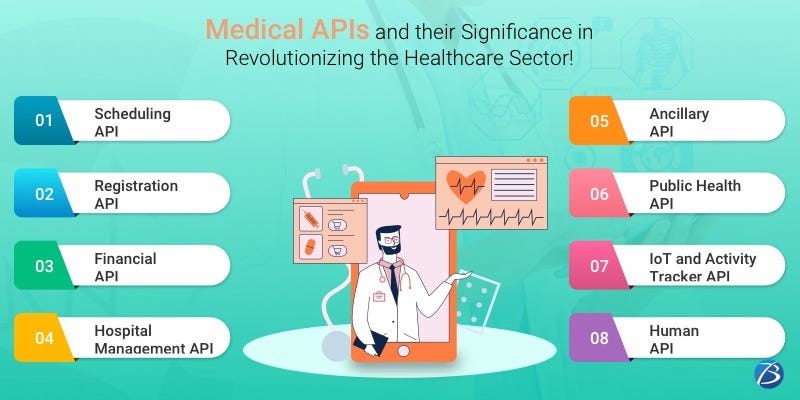
Scheduling API

The appointment scheduling feature is one of the most liked, rather mandatory features of the new-age medical apps. Scheduling API comes with features meant for incorporating the appointment booking feature, cancelling or rescheduling appointments, sending reminders, synchronizing the available slots with the calendar, etc. in the medical apps or software systems.

Registration API

These APIs are utilized for handling the functions related to registration processes involved with various EMR/EHR systems. These APIs can be embedded with EMRs for exchanging patient-specific data. Both patients and physicians will be able to easily register using the Registration API.

Financial API

As the name suggests, this API is used for managing money transactions between patients, medical institutions, pharmacies, or insurance agencies. It helps to generate invoices and bills, send prescriptions, and also manage claims related to insurance. It can further be narrowed down as claims API or billing API, depending on the functions it is used for. However, the healthcare app development firms must make sure that they choose the financial API that has robust security features.

Hospital Management API

This API is purposed to managing clinical data exchanges and other related operations within a medical facility. This API helps in sending and receiving medical information from various units as and when required. This information covers patient records, immunizations, treatment plans, family medical history, etc. Clinical API is another API used for performing similar kinds of tasks.

Ancillary API

There are several processes in a medical facility that lie outside of the organization; for instance, pharmacies, laboratories, radiology units, etc. Using the Ancillary API, the concerned healthcare professional can communicate with these external units, refill the requests with them, and also gather the required data from them. A good example of this is when a hospital wants to exchange some medical information like prescriptions with external pharmacies and refill requests. Ancillary API can be helpful in this scenario.

Public Health API

Such APIs are utilized for exchanging reportable clinical data records with the professional, public, or federal registries, and also with research institutions. Public Health APIs can also be employed for gathering public health records in the scenario of a rampant widespread threat like the ongoing Coronavirus Pandemic. Due to their ability to easily exchange data, these APIs can also be utilized for public health surveillance from data systems like EHRs.

IoT and Activity Tracker API

Wearable Health apps use these APIs for data collection from several IoT-enabled devices like activity trackers, wearable devices, etc. Such data streams help in the monitoring and management of personal health, especially for fitness enthusiasts.

Human API

This API is usually employed by doctors and physicians for viewing test results, prescriptions, patient profiles, and similar other important records. This helps the doctors to access the medical data easily, save time and money, and refrain the patients from longer wait times during appointments.

Some API Challenges

Though APIs have resolved the interoperability issues to a great extent, there are still a few technological gaps.

Since there is a lack of data standards in the healthcare sector, it is essential to create customized APIs that aptly caters to the needs of the concerned service.

In case a system incorporates myriad APIs, then data transformation into a readable format could take several months or even years.

Furthermore, when there are multiple APIs in a system, it can become tedious to manage those APIs, especially when the systems need to be replaced or upgraded.

Testing of these APIs could pose another challenge because healthcare systems usually deal with complex data; which at times, may not be replicated in the testing environments.

There could also be challenges in the privacy and security of the medical data and so, the APIs must be developed to provide safe data storage and exchange, using technologies like Blockchain, encrypted protocols usage, advanced authentication, etc.

Experts have also predicted that there could be some financial concerns, lack of proper documentation, lack of tools for designing, testing, etc.

The Future Scope of Medical APIs and Interoperability

Though there are several challenges coming up, medical APIs are going to be the key when it comes to interoperability and data security. Needless to say, medical APIs have a bright future. Besides, the data exchange laws of the 21st Century Cures Act, are supportive of these APIs. They encourage the proliferation and standardization of these APIs. So, it is expected that healthcare APIs will expand and develop to deliver the best possible services to patients as well as service providers. 

Final Words:

It's evident that medical APIs can boost the communication, overall performance, and efficiency of healthcare organizations. It is expected that these APIs in healthcare will expand to enhance the patient experience, connect healthcare providers to complete data, enable the patients to easily and safely access their medical records, etc. and thus, be advantageous to every medical & healthcare application development company competing to deliver the best services. So, medical APIs are the future of this sector.

With this, I would like to wrap up my article. Do share your views and experiences about the medical APIs in the comments below.

To know more about our core technologies, refer to links below:

WordPress App Development

Node.JS App Development

Flutter App Development

Thursday, July 8, 2021

Healthcare App Development: Crucial Factors and Considerations!

Healthcare apps have gained a lot of momentum in the last couple of years, and the demand for healthcare mobility solutions has sky-rocketed, ever since the emergence of the Covid19 crisis. Such high-end healthcare apps hold the potential to revamp the medical system altogether by offering improved services, efficiency, accuracy, effective communication, reduced expenses, and many more.

Looking at the potential of the healthcare app development market, multiple businesses have begun leveraging this golden opportunity to design innovative app solutions for making life easier for patients, practitioners, and medical facilities. But, several apps fail to make a mark owing to the following reasons:

  • Poor usability
  • Failure to address some vital problems existing already
  • A dearth of clinical inputs
  • Non-compliance with regulations concerning security and privacy

Therefore, if you are willing to develop a modern-day healthcare app and want to hire Healthcare app development services, you first need to be well versed with the development requirements of a healthcare application.

This post outlines the key aspects you need to consider for architecting an impeccable healthcare solution. It will assist you in your app development journey.

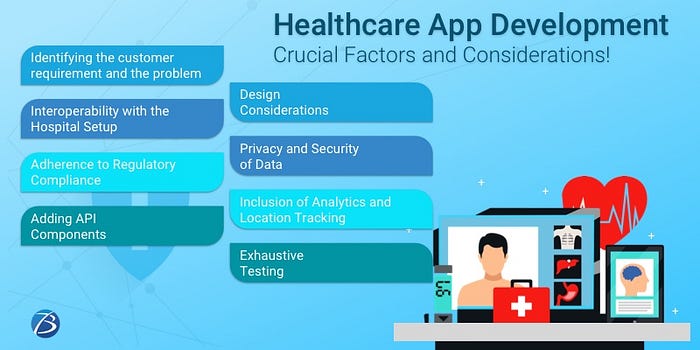
Key Factors to Consider during Healthcare App Development

Identifying the customer requirement and the problem to be solved

Instead of assuming the consumer needs, healthcare app providers should identify their actual requirements and expectations. This can be understood by conducting patient satisfaction surveys.

Once you receive the inputs or feedback from your target audience, you can figure out what is the existing problem that your app can resolve. This is a superb strategy to incorporate additional functionalities that are lacking in the current medical apps, giving you a chance to craft bestselling apps. For example, offering advanced features like bill payment, insurance verification, lab testing results, etc. in addition to the basic ones will add value to the app.

Design Considerations

It’s very important to pay heed to the UI and UX while crafting a healthcare application. A simple, scalable, and sustainable design is the key to success.

The design needs to be simple and intuitive. Multiple interfaces need to be avoided as it would confuse the users and they wouldn’t stick to your app; even if your app boasts of exceptional features. Furthermore, easily operable scheduling platforms and seamless third-party integrations are desirable. Remember that patients are required to fill in data about medical records and appointments at regular intervals; while the doctors need to record their daily visits and update the medical histories of each patient. Therefore, your app must necessarily be user-friendly. So, it is advisable to make the app function on commonly used devices using less complex software.

Besides, most patients using medical apps are likely to be in a vulnerable state of mind. Hence the colors, fonts, and texts within your app must illustrate a positive picture, be decent enough, and support the patients’ state of mind; so that they experience positive vibes while using the app.

Additionally, you must work on making your apps scalable and sustainable. If so, developers can upgrade the app periodically by incorporating new features, to keep up with changing times.

Interoperability with the Hospital Setup

A healthcare app must be interoperable with the current clinical management procedure of the medical facility as well as healthcare devices being used by the staff. Usually, most healthcare organizations prefer a single software that can be also used as a mobile app to steer clear of any deviations in their existing functions.

For facilitating interoperability, healthcare mobility solutions, as well as healthcare scheduling software are based out of a cloud. But even today, some hospitals depend on a traditional hosting setup or install standalone software because cloud hosting services are too expensive. In such instances, healthcare app developers need to create an application that is compatible with the current setup.

Privacy and Security of Data

Privacy of patient data is a crucial factor in healthcare apps and hence the app creators must follow the privacy and safety protocol. For instance, all healthcare apps in the U.S.A. must comply with the HIPAA (Health Insurance Portability and Accountability Act), for preventing unauthorized access to “Protected Health Information.” As per this act, the patients’ particulars such as health records, financial records, addresses, etc. have to be protected by the service providers at any cost. Providers can achieve this objective by employing advanced protection methodologies via strong passwords, limited access to PHI, digital signatures, end-to-end data encryption, the usage of secure communication channels for data exchange, and many more.

Adherence to Regulatory Compliance

A healthcare app development company must comply with standard regulations to ensure the security of the device and apps. The important ones are as follows.

  • The lifecycle of the healthcare app development process should fulfill IEC/EN62304 requirements.
  • The documentation process should be orderly and well-controlled so that it achieves regulatory approval.
  • A standard has to be followed to cater to the requirement of users with special needs like sensory impairment.
  • The company should comply with standards for comprehending the process of applying for risk management. Risks are to be identified on the basis of regular and faulty conditions as well as the chances of misuse.

Inclusion of Analytics and Location Tracking

The integration of the analytics feature into the app enables doctors to closely monitor the patients’ medical history and track their health conditions. This is specifically applicable in the case of patients with critical conditions. In such situations, the instant availability of medical data is necessary for predicting patients’ receptiveness to a particular disease and accordingly take proactive measures to treat the patients.

Besides, the location tracking feature allows tracking critical patients and monitoring their health conditions during climatic changes and similar unusual conditions.

Adding API Components

Application Programming Interface commonly known as API refers to a set of protocols that execute the process of interacting with the software module of your dedicated medical application.

You may have noticed that most social networking apps ask for authentication for accessing files from the users’ device, during the first-time login. Likewise, healthcare apps also need a similar procedure for being able to connect with the users’ device; a remote server needs to access the central patients’ repository. For executing this task APIs are required, as the authentication process during login is supported by an API request for connecting the users’ device to a remote server. So, app creators may have to add API components and may even require extra APIs from vendors and suppliers.

Exhaustive Testing

As healthcare apps contain confidential patient data, an exhaustive testing process is necessary to avoid disastrous repercussions post-launch. Take a look at the key testing areas you shouldn’t miss.

  • The app’s compatibility across various platforms and browsers like Windows, iOS, Android, etc.
  • The app’s compatibility with different healthcare devices and systems
  • The preciseness and accuracy of Geo-location services
  • The security standards and other authenticities such as HIPAA Compliance, PHII, PII, etc.
  • The app’s performance by setting high load and performance benchmarks.
  • The app’s functioning during poor connectivity

Final Thoughts:

Your success is solely dependent on the usability, the driving need, and user-friendliness of your app. So, think smart, act wisely and decide accurately for crafting a bestselling healthcare app.

Do not forget to check out the methodology to follow for creating healthcare apps.

To know more about our core technologies, refer to links below:

Swift App Development

.Net App Development

Java App Development

Tuesday, October 20, 2020

The Key Factors to consider while executing a Healthcare App Development Project!


Smart digital healthcare solutions are doing wonders to eliminate the challenges and limitations that exist in the medical sector. No wonder, the past couple of years have witnessed a soaring demand curve for healthcare mobile apps. This demand has sky-rocketed in the year 2020, owing to a stay-at-home economy on account of the Covid19 outbreak. The on-going trend of social distancing is encouraging patients to switch to online doctor consultations, treatment, and remote monitoring. Doctors and other providers, too, now prefer digital healthcare services. Consequently, the rate of adoption of Healthcare app development has gone up.

As per the business data research portal Statista; ‘The value of the global market size of mobile healthcare applications was approximately 2.4 billion U.S. dollars in 2017 and is estimated to rise up by more than 11 billion dollars by the year 2025.’

It’s indeed a golden opportunity for a Mobile App Development Company to capitalize on the market demand. However, creating flawless medical apps that provide a rich user experience is no cakewalk. Thus, developers must carefully craft the healthcare app to make it universally acceptable. This article discusses the key considerations that a healthcare mobile app developer must keep in mind.

Key Factors to consider during Healthcare app development

Given below are the key factors to consider while developing healthcare mobile applications.

Understanding the targeted hardware

Healthcare apps usually target varied platforms like smartphones, tablets, and desktops to reach out to more users. But, developers must know that apps pertaining to enterprise healthcare solutions and patient engagement are mostly operated on tabs, whereas ‘call a doctor’ apps are mostly operated using smartphones. Also, user interaction and preferences are different in these gadgets. Yet, one must follow the common trend of designing apps that work on mobiles as well as tablets. So, building control-based applications should be avoided.

Enticing UI and UX designs

An easy-to-operate app design will not only help the patients to effortlessly enter appointment-related information and medical data; but also help the practitioners in updating the medical histories of patients and maintaining visit records with ease. Moreover, the colors, pictures, texts, and fonts used shouldn’t portray negativity, as it might make the patients feel more depressed. Attractive designs elevate the mood of the patient so that they are able to enjoy the benefits that the app offers and avoids rejection of the application. 

Creating interoperable apps

Present-day healthcare spaces use diverse equipment and software like EHR solutions, Practice Management Systems, dermatological sensors, etc. Hence, your mHealth app must be interoperable. In other words, the app should be capable of connecting, communicating, and coordinating with the existing software systems present in the healthcare facility environment. Sometimes, developers may have to create a compatibility layer within the mHealth app to match it up with the erstwhile hospital setup, for successful implementation.

API Integration

An API (Application Programming Interface) accomplishes a specified task and interacts with the software or the software module. APIs can be an internal or third party. APIs are essentially required by advertisers, social networking apps, etc to pass on information uninterruptedly, as well as by the user to connect their device with the remote server. Also, API components need to be added for allowing device access to the centralized patients’ repository containing engaging solutions. A clearly defined API documentation should be written to maintain privacy. In some cases, the app creators may need extra APIs from vendors or suppliers to ease out the workflow.

Adopting futuristic technologies

Integrating medical apps with revolutionary technologies like IoT, ML, and AI is the need of the hour as they enhance the app’s versatility. Such apps turn out to be smarter solutions offering improved treatment methodologies, remote healthcare services and enable faster recoveries. Integrating ML and AI technology in healthcare apps enable physicians to diagnose correctly, check symptoms, fight depression, detect cancer, etc.

Focus on Security

The healthcare ecosystem involves huge chunks of sensitive and confidential data that are prone to security threats and data breaches. Therefore, app developers must adopt high-security standards while building Health and fitness apps. The most important measures are:

  •          End-to-end data encryption
  •          Multifactor authentication
  •          Regulatory compliance like HIPAA, CDA, FHIR, Direct, etc. depending on the kind of medical data and the region.

Iterative approach

An Iterative approach refers to developing apps by adding features gradually and progressing slowly in iterations during the developmental process. This approach facilitates creating flawless software applications. By following an agile methodology developers can deliver the working codes after every iteration for the review thereby reducing the rework efforts.

Adequate testing

Errors in Healthcare apps may have dangerous repercussions. So, thorough testing is essential before deployment. Mobile app Developers must check the precision and reliability of Geo-location services, ability to function during poor connectivity, performance, app security, authenticities such as HIPAA compliance, PHII, PII, etc. and compatibility with various platforms and browsers.

Minimum Viable Product

Developing medical applications involve challenging requirements and huge investments. Hence, it is advisable for start-ups or firms with budgetary constraints to create an MVP (Minimum Viable Product) initially instead of a full-fledged application to validate its chances of success. Once satisfied with the adaptability amongst users, one must keep adding the desired functionalities to the application, in the form of updates, based on customer feedback.

Wrapping Up

The aforesaid considerations during Healthcare app development are crucial in deciding the fate of an application and gaining the trust of healthcare stake holders. A user-friendly application possessing high usability will never fail you and would fetch you unprecedented success.

Looking for customized healthcare solutions? Contact Biz4Solutions, a note worthy Healthcare app development Company having 9+ years of experience in building smart healthcare solutions for global clients. Mail us your requirement at lead@biz4solutions.com.