Monday, October 4, 2021

How Startups can Leverage the On-demand Economy? Key Steps and Strategies!

Today, the market is flooded with a variety of on-demand apps and services. Consumers can order groceries, food, etc., or even hire the services like beauty, healthcare, repair and maintenance, taxi service, etc. instantly from these apps. Besides, during the pandemic situations, the on-demand economy has proved to be a game-changer for both- consumers, as well as startups or business entities who are creating top-grade on-demand applications.

Here are some astounding numbers.

According to Harvard Business Review, more than 22.4 million consumers are using the on-demand services per year. Besides, the total expenditure on the on-demand economy is estimated to be $57.6 billion. These reports depict that the future of the on-demand economy is bright. Owing to this, several on-demand app development companies are emerging at a fast pace globally.

So, this post is meant for the startups and mobile app development firms who want to leverage this economy to convert a business idea into an exemplary on-demand app. Here, we have first outlined the immense benefits of the on-demand economy for both consumers and app owners. Later, we have explained the steps and strategies to design a modern-day on-demand application. Let’s get into the details.

On-demand Apps: Benefits for Consumers

  • Ease of ordering the required services just in a few clicks
  • Flexible payment options like Cash-on-delivery, Advance payments through net-banking, mobile wallets, and even cryptocurrencies
  • Real-time tracking of orders to get a clear picture of the progress of the order
  • One-click cancellation or re-ordering/re-scheduling, in case something goes wrong

On-demand App Development: Benefits for Startups or App Owners

  • Effective communication with consumers through the apps
  • Higher customer satisfaction due to flexibility and convenience of ordering
  • Increased business ROI
  • Competitive advantage, strong online presence, and brand awareness
  • Numerous business opportunities as on-demand apps can be created for diverse businesses
  • Better user engagement and retention
  • Highly scalable apps as startups can mold the apps into a huge marketplace in the future.
  • Generation of intelligent analytics regarding consumer behavior, services/products that are more popular, their preferences, etc.

Things to Consider and Vital Steps to Follow for On-demand App Development

In this section, we will first highlight various business models meant for on-demand apps. Then we will shed light on some factors that startups and every on-demand app development agency should consider before starting the mobile app development process. Lastly, we will outline the steps to design an advanced on-demand app.

Details of On-demand Business Models

  • B2B Model: This is Business to Business Model for on-demand apps where one business connects with the other through the on-demand app for services.
  • B2C Model: This is the Business to Consumer Model, the most popular one, where the on-demand apps are meant to provide products or services between sellers and consumers directly.
  • C2C Model: This is the Customer to Customer Model. This type of on-demand app acts as a platform for exchanging products/services between different customers.

Factors that Startups must consider before starting On-demand App Development

The Objective of the On-demand App: What is the concept or idea or purpose of your on-demand app? Deciding on this factor is the most significant step.

Research and Analysis: Do a thorough research of who your target audience is, what is the region where you want your app to be marketed, whether your app will solve some meaningful problem or not. Analyze whether people will be interested in your app idea or not.

Market Exploration: Study the market well and make sure that a similar app is not existing in the market already. Also, study the latest trends, and your competitors as well.

MVP or full-fledged App: Before beginning with the on-demand app development, you should decide on whether you want a basic version of the app or a feature-rich app with all functionalities. For startups, it is good to initially go with an MVP model as this will keep the budgets in control.

In-house development or outsourcing: The startup team should also brainstorm on whether they want to hire an in-house team for app creation or whether they want to outsource the project

Steps and Strategies to Create a New-age On-Demand Application

Strategizing: Once your research is completed, plan on designing the product roadmap, wire-framing, prototyping, how to implementing the design, hiring the required team/company, how to develop the app with relevant features, and how to finally launch the app.

Technology Stack and Platform Selection: Select the technology stack and a scalable platform for developing the app, define the technical architecture by choosing the right back-end technology, APIs, and front-end technologies for the app.

Secure App Development and Testing: Along with your development team, begin the app development and review the codes, features, screens, etc. from the initial stages to ensure they are free of bugs and secure. Next, perform thorough quality assurance testing for the app. Test the app from several perspectives- user experience testing, performance, and functional testing, device and platform testing, and lastly, security testing.

Launching the first version: Next step is the deployment of the beta version i.e. MVP of the on-demand app. Deploy it on respective stores- iOS or Android. Let the consumers use the app and provide feedback for further improvement. The analytics related to user engagement will help you know about the scope of your app.

Maintenance and Upgrading: As per the response from the users, keep the app updated, add new features and make the required modifications. This will help you to keep your app relevant to the current trends.

Concluding Thoughts

On-demand applications are designed to provide efficient services at the doorsteps of consumers. Such ease and comfort by a few clicks on their smartphone, has driven the consumers crazy and they are accepting numerous types of on-demand applications instantly. So, looking at the market scenario, it can be said that on-demand delivery app development has a bright future and this economy is going to stay here for long. In the coming years, it will enter several new industrial domains too. It is a great opportunity for Start-ups and they must leverage it to the fullest.

So, did you find this post insightful? Do comment below or drop us a line to let us know your thoughts about the on-demand economy and the on-demand apps.

To know more about our core technologies, refer to links below:

Swift App Development

.Net App Development

Java App Development

Friday, October 1, 2021

How is Blockchain Technology bringing transparency to Fashion Industry?

 Blockchain technology came into being as support for cryptocurrencies. Interestingly, this technology has evolved into a game-changing solution that has reshaped the functioning of diverse industrial domains and the fashion industry is no exception.

The Blockchain-infused approach was introduced into the fashion industry at the Shanghai Fashion Week, held in 2016. Here, the renowned apparel brand Babyghost, partnered with technology providers to create a Blockchain Apparel Technology that allowed all the stakeholders of the supply chain including customers, to validate the authenticity of the clothing manufactured by the brand. Small-sized chips and accessories were embedded within the clothing items so that one can scan and determine whether a specific garment was authentic.

Today, Blockchain has emerged as an effective solution that addresses myriad challenges encountered by the fashion industry and ushers in the much-needed transparency. Let’s explore its role in transforming the fashion industry!

Blockchain Technology in a Nutshell

Blockchain, a P2P (peer-to-peer) decentralized distributed ledger technology, guarantees that the records that are stored within cannot be destroyed or forged. The key objectives are to offer immutability, transparency, security of data, and evidence whether a specific data is safe and has not been altered. And, despite being known for its pivotal role in the origin of digital currencies, this technology is equally effective for non-crypto currency uses as well.

How does Blockchain Technology function?


Blockchain comprises a group of blocks that carry information. These blocks possess information concerning transactions like purchasing behavior, consumer profiles, the time and date of operations, etc. Each block consists of a unique set of data identifiable by a “HASH” code algorithm. Since it stores data sequentially, it can be considered as a database shared across a private/public network. A copy of this shared database is present with each authorized user. This arrangement prevents any malicious users from altering the database’s content. As this database/ledger is “append-only”, one can only add data but not carry out any modifications of the existing data. Therefore, the P2P network provided does not need the involvement of any regulating authority or intermediary. The transaction records stored on a Blockchain enable identifying the owner of a value item and via the ownership, subsequent transactions are transferred, creating a chain of ownerships/authenticity.

Fashion Industry Challenges

· There’s been a rise in the number of forged products and this hampers the brand value of a renowned business.

· Untimely delivery of products leads to loss of user advocacy and sours relationships with customers.

· The consumers, manufacturers, retailers as well as suppliers of the modern era demand transparency in their products.

· Today’s consumers need to be well versed in the history of products for validating their authenticity.

· The “conscious customers” question a brand on the environmental footprint of garments, textiles, footwear, etc.

Blockchain in the Fashion Industry: Implementation and Benefits

Check out how Blockchain resolves the numerous roadblocks encountered by the Fashion industry!


Bringing in Transparency within Supply Chains

Currently, most of the supply chains of the fashion industry lack transparency. This is because the supply chain for any fashion-related product involves several developmental stages that take place across a couple of countries around the globe. Therefore, fashion brands find it challenging to monitor the quality of raw materials that are used to manufacture their products. This roadblock can be effectively resolved by employing Blockchain technology. Blockchain’s NFC (Near-Field Communication) tags enable companies to track the entire product lifecycle and record the products’ journey globally.

As such, retailers are able to track the manufacturing process of apparel right from the consumption of raw materials to the creation of the end product which brings in complete transparency in the supply chain. Thanks to the transparency tracking methodologies, producers get useful insights into their value chain and can ensure the proper execution of processes such as handing off goods to third parties and labeling the end product.

Identifying the Authenticity of Goods

The Blockchain-empowered solutions are known for their distinct capability of creating a physical-digital link between the goods and their digital identities on a Blockchain. Usually, a serial number or a cryptographic seal plays the role of the physical identifier and links back to the “digital twin” of an individual product. This way, each time a product changes custody, the Blockchain records that change. For this reason, retailers can effortlessly identify counterfeit goods that miss the physical digital link as well as any attempt to divert goods in between. Moreover, the chain of custody on the Blockchain displays a record of the last party that has gained the products’ custodianship. As a result, it becomes obvious where the authentic product was diverted out and the counterfeit product was slipped in. This helps manufacturers protect their brands against counterfeiting.

The afore-mentioned process enables determining the authenticity and genuineness of a product for providing a digital authenticity certificate to every new product. For instance, Vacheron Constantin uses a Blockchain-backed validation mechanism for issuing a digital identification certificate to every new watch. Furthermore, each time a watch is serviced or transferred; this mechanism stores the records of the proceedings on a public ledger.

Improved Product Quality and Enhanced Efficiency

Blockchain integration enables brands to trace the weak links within their business operations. Hence, it’s easy to identify a production department that does not adhere to the defined quality standards or a supplier who provides defective materials. This enhances the efficiency of the manufacturing process and improves the overall quality of the end products.

Hassle-free Royalty Tracking

The Blockchain ecosystem facilitates seamless tracking of royalty payments. This is because it enables the designers to create unalterable evidence of the design created. It can also be utilized for building and tracking trademarks, license designs, royalty programs, and the sales generated through such design creations.

Transferring Ownership of Digital Apparel Securely

Digital clothing has garnered popularity in recent times as designers are providing consumers the option of purchasing digital apparel and the ability to digitally fit in it. Blockchain apparel technology enables transferring the ownership of digital clothing items. It also rules out the possibility of any issue concerning the stealing of product designs, thereby creating uniqueness and desirability.

Building Evidence of Use for Trademarks

Blockchain technology facilitates the creation of solid proofs of usage for trademarks. These trademarks save time and expenses for companies who have to undergo the hassles of renewing as well as securing a trademark when invalidity actions or disputes occur.

Optimizing Operational Costs


The Blockchain environment promises an effective supply chain, improves data management, and minimizes the risks of counterfeiting. It seamlessly integrates surfaces for reconciling data through operational as well as service lines. These advantages help in optimizing operational costs.

Blockchain Integration in the Fashion Industry: Tips on Execution

If your brand is facing challenges in proving your worker welfare standards to the industry or needs to authenticate the origin of raw materials/goods in the supply chain; it’s high time you should hire experienced Blockchain app development Company.

The first step is holding a discussion with Blockchain app developers on building a solution that would collect information from the right set of people. Next, instruct the developers to design a structure of information that will allow you to know the details of the raw materials/fabric/chemicals used. Once your objective is clear, go ahead and select the apt Blockchain platform that will suit your requirement as there are many of them with distinct functionalities. Thereafter, you need to begin with creating the frontend and UI of the application. Also, make sure that your Blockchain-powered app can be effortlessly used by all your stakeholders. In case of any assistance feel free to contact Biz4Solutions, an experienced Offshore software development Company in India offering Blockchain App development services.

Final Words

Today’s fashion industry demands transparency and sustainability. So, the fashion brands that are unable to meet this requirement will find it difficult to fulfill the needs of a highly competitive market. And, Blockchain integration is the one-stop solution to maintain the industry standards for your fashion brand.

To know more about our core technologies, refer to links below:

PHP App Development Company

WordPress Development Company

Node.js App Development Company

Wednesday, September 29, 2021

An Overview of New-age Event Apps and Steps to Develop Them!

A host of events are held daily, whether sports events, corporate meet-ups, festivals, exhibitions, conferences, or weddings, and needless to say, planning them is a tedious job. Any event, whether small or large, needs proper planning and organization to make it a huge success.

In any event, there are several tasks like informing the attendees, managing the vendors, promotion of the event, budget constraints, and many more. A few years back, all these tasks were handled manually, but thanks to the new-age event apps, such tasks can be executed seamlessly in automated mode. Besides, these apps also make event management a stress-free job for planners, sponsors, and organizers.

These event apps are reshaping this industry in myriad ways. Rather, as per a survey, in the year 2020 itself, about 71% of the event professionals invested in event technology for boosting their event business. So, it is high time for the event organizers and planners to consider building impactful event planner apps and take their business to a new level of success. 

In this post, we have explained in detail about the potential advantages of advanced event apps and the detailed steps for creating such top-notch event planning apps. Let’s delve into the details.


Key Advantages of Event Apps for Planners, Sponsors, Organizers, and all Attendees

  • An event app helps in giving an exceptional experience to all event attendees by simplifying the tasks like registering for the event, buying tickets, checking in using their smartphone, etc.
  • It helps enhance the interest of the clients, even before the actual event begins. For instance, an event app can be utilized for discussing certain subjects for better attendees’ engagement. A few other options include live steaming, surveys, contests, etc.
  • An app enables the attendees to network with people having common interests or connect with them for career enhancement, or business benefits, etc.
  • An event management app also acts as a robust promotional platform for event speakers, sponsors, etc. as some of these apps have a distinct section for displaying information of speakers, sponsors, etc. Thus, they also get an in-app sponsorship space through these apps.
  • An event management application can not only create real-time content for any particular event, but it can also control the content with an online CMS. This empowers the enterprises to create, edit or distribute the relevant and up-to-date information within the application, without the risk of sharing confidential, sensitive, or private information with the wrong users.
  • Furthermore, an event application helps to broadcast any event-related news, changes in the timing/venue, etc. on the social media pages of the event to be held, using the social media synchronization feature in the app.
  • These apps can help the event planners and organizers to get real-time feedback and review of the events for analyzing the events’ progress. These apps help gather insightful analytics which is beneficial to the organizers for making conclusions of their planning and marketing efforts.
  • One event app can be a one-time investment that can be utilized for hosting multiple events.


Detailed Steps to Create a High-end Event App


Determining the Objective

Why do you want this app? You first need to figure out the purpose behind developing the app. For this, brainstorm on the basic concept, the target audience, their preferences, your competitor apps, etc. by conducting thorough research.


Decide the Type of Application You Want to Develop

Event apps can serve different purposes as per the type of event. So, before getting straight into the event planning app development process, you need to know the type of event apps that exist. The types of these apps are categorized based on the following factors:

  1. According to the purpose: Event aggregators or dedicated event applications

Event aggregators: these are built for organizing several events from different organizers, where every organizer invites the event attendees.

Dedicated event applications: these types of apps mostly have just a single organizer who hosts events just for one single company.

  1. Based on the audience: Some apps are focused on all the attendees and their main purpose is networking and schedules. Some event apps are focused on the organizers and such apps are designed to manage the events in the best possible way.


  1. As per the implementation: White-label solutions or customized event apps

White-label solutions: these are the apps from which the organizers can draw and plan any event.

Customized event apps: these are the apps that can be developed with a certain style that aligns with the image, web design, etc. of the company.

  1. The event type and scale: these include apps meant for local meet-ups, global conferences, parties, weddings, etc. For instance:
  • company event planning apps
  • conference planning apps
  • web conference software
  • party planner apps
  • festival guide apps
  • wedding event planning apps


Brainstorm on the Implementation Options

Do you want just a mobile app or a web-based app or both? Web apps are great when we want the ticket purchasing feature, but mobile apps are the best while hosting an event and all the users are present at the event location. Also, mobile apps can work in an offline mode. For mobile apps, you can either choose to create a native app or go for cross-platform options.


Decide on Other Technical Considerations

As we know, iOS and Android are the most dominating platforms. So, you may choose any of these or both platforms as per your goals and budget. Other platforms like Microsoft and Blackberry too can be considered, but they may cost a fortune. Next, for enhancing the functionality of your event app, consider adding API interface integrations or third-party plugins. 


Finalize the Features and Functionalities

Here is a list of essential as well as advanced features to choose from for your event app:

Essential Features:

  • GPS Integration
  • Event Booking
  • Event List and Schedules
  • Push Notifications
  • Adding to Favourites
  • News Feed
  • Program Preview
  • Calendar
  • Payment Integration
  • Social Media Integration Feature
  • Photos/Videos
  • App Analytics


Advanced Features:

  • Messaging and Chatting
  • Mobile check-in
  • Live-streaming
  • In-app camera
  • Offers and Discounts
  • QR code scanning
  • Gamification features
  • Personal Mobile Vallet
  • Data Collection and Processing
  • Customer Feedback and Rating


Hire Event App Development Team

Now, it is time to research well and hire a reliable event app development company for accomplishing your project. This would always be a better option rather than hiring an in-house team as you will get a ready team of expert event app developers on a cost-effective budget. This will also improve your time-to-market and allow you to focus on your core business. In this case, hiring an offshore development company like Biz4Solutions is a wise decision.


Design, Test and Launch the Event App

Now, connect with your development team, set clear work expectations and timelines for them, and create a visual prototype for your app. Start the design and test the app after every stage of app development. Once the app is completely architected, launch the app.


Consider Monetization Options before the App Release

It is vital to consider the monetization of the app, even before its launch. After all, your investment must be worth it and should be able to generate some additional income for you. Here are some of the pointers you can consider:

  • Making some of the features paid
  • Placing relevant ads on the app
  • Adding minor service fees for ticket selling
  • Capitalizing on partnerships
  • Customizing your event app to be a white-label solution


Final Thoughts

Digitalization has disrupted the event planning industry in diverse ways. Event apps have become a must-have for today’s event planners and organizers. Also, in this pandemic situation, most events are hosted online using some platforms and it is highly likely that this trend would continue for years to come.

So, in this blog, we have outlined the key benefits of event planning apps and also explained the app development steps in detail. Hope it helps you in making appropriate decisions while designing your event planner app.

Do comment below or reach out to us for any assistance on developing event mobile and web apps.

Monday, September 27, 2021

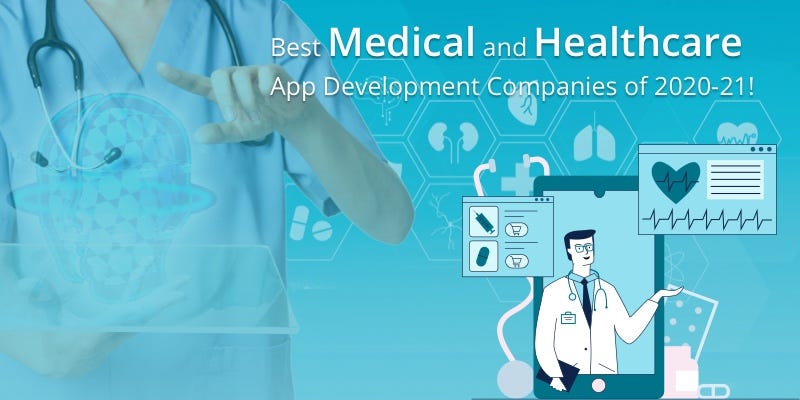
Best Medical and Healthcare App Development Companies of 2020-21!

The healthcare sector is growing leaps and bounds and is at its peak now. Right from giant hospitals to large pharmacies to individual clinics, everyone is adopting advanced healthcare technologies to enhance their services, improve productivity and cater to their consumers aptly.

If we look at some stats, the total expenditure on healthcare products and services of the US is almost 17% of its GDP. Also, the US spends approximately 10,600 USD per capita on only healthcare-related services, which is the highest across the globe, followed by Norway and Switzerland.

These stats indicate that the healthcare domain is growing exponentially. So, all kinds of healthcare bodies and other medical facilities are investing in digital healthcare apps, management systems, etc. at a fast pace.

Below are the List of Top Healthcare App Development Companies in 2020-21

Biz4Solutions

Biz4Solutions is one of the well-established healthcare app development companies located in Texas, USA. It is known for building a wide range of customized medical and healthcare app solutions. The company has a decade-long experience in this arena and they have adopted pioneering technologies like IoT, cloud, artificial intelligence, blockchain, RPA, data analytics, etc. for creating next-gen healthcare products.

Their healthcare development team is located in India and has 100+ passionate tech nerds. This team comes with exceptional capabilities and experience to deliver transformative healthcare apps and solutions. They already have architected patient engagement applications, appointment scheduling apps, on-demand doctor apps, healthcare management systems, and much more. Besides, their app solutions are HIPAA compliant to ensure high-level security of medical data. Their client-focused approach makes them stand apart from the rest of their competitors.

Dogtown Media

This healthcare development firm aims to create a positive impact on the patients’ or end-users lives by developing life-saving digital solutions. Their development team, together with their healthcare experts provide solutions that simplify several processes in hospitals, solve vital issues like scheduling appointments on phones without the need to call, and they also design products like mHealth apps that enhance the quality of patient treatment. Besides, they excel at improving medical app functionality, redesigning older apps, troubleshooting, and interface designing. They have fabricated several fully functional and commercially viable medical apps as of now.

Appinventiv Technologies

Appinventiv Technologies is another top firm that offers custom healthcare products and services for diverse healthcare professionals, health-conscious people, patients, and other intermediaries like hospital administration, pharmacists, etc. Appinventiv started its journey in 2015 and today, it is a world-class healthcare company. They too excel in most advanced technologies like Machine Learning, IoT, AI, Blockchain, etc. Besides healthcare, they also provide their software services to the entertainment industry, real estate, banking and finance, etc. sectors.

Siddhi Infosoft

This organization has been one of the leading companies providing amazing web and mobile app development services for healthcare and several other industrial sectors. It was founded in 2011 and since then, they have brought several innovative ideas to life by crafting unparalleled mHealth apps and similar solutions. They have extensive industry experience and have fabricated digital solutions that resolve the real problems of medical organizations and add value to their patient’s lives. Their exceptional work quality, timely delivery of work, and professionalism have been the major drivers that satisfy the clients and keep them bounded.

Techexactly

TechExactly is one of the best healthcare development entities having a diverse clientele across the globe. This company helps healthcare organizations, care providers, and other medical businesses to gain operational efficiency and competitive advantage by creating bespoke medical apps and solutions for them. They have developed smart, sophisticated, and user-friendly medical apps for both- patients and doctors. Furthermore, the compliance-fit mHealth applications developed by them have introduced a unique way of providing care.

Space-O Technologies

Space-O Technologies aims to make healthcare accessible to everyone by following best industry practices and offering a wide range of custom medical solutions. The company provides top-grade healthcare solutions that attempt to integrate primary, residential, inpatient, outpatient, and community-based care, for offering a well-coordinated and holistic care environment for the patients. They abide by HIPAA guidelines to make sure that their app solutions are safe and secure when it comes to sensitive patient information.

Hidden Brains

This is a renowned healthcare IT consulting and service provider firm that aims at providing advanced quality solutions for diverse types of healthcare clients. They excel in the creation of high-end innovative app solutions that drive transformation in healthcare organizations leveraging them. Their solutions are meant to connect patients to practitioners, caregivers to their colleagues, and medical providers to patient records for improving care practices. They have designed various telemedicine app solutions, clinical communication systems, fitness apps, pharmacy solutions, etc. as of now.

Octal IT Solutions

Based in India, Octal IT Solutions is well-known for providing impactful healthcare products and services that are transforming several medical facilities and healthcare businesses all over the world. Their development team always keeps themselves updated with the latest trends and implementations to deliver unique and client-centric healthcare solutions. Since their inception, they have worked hard and earned a vast client base in the healthcare world by crafting tailored healthcare mobile applications for them.

Konstant Infosolutions

This firm caters to different types of audiences in the healthcare domain. Their team architects healthcare software applications for overall hospital workflow management, for patient education and engagement, for empowering doctors and physicians, for ensuring patient-physician communication, for millennials through new-age wearable and fitness applications, and also for boosting the revenue for healthcare facilities.

Peerbits

This is an eminent IT solutions provider delivering complex healthcare solutions to a large number of clients globally. They have a specialized team of healthcare developers for creating mHealth apps and healthcare solutions for physicians, patients, clinicians, and other caregivers. They ensure that their solutions are comprehensive, compliant, and secure. Peerbits has developed a host of solutions like medical apps, wellness apps, remote healthcare apps, health monitoring systems, mHealth connectivity apps, etc.

Final Thoughts

With digitalization, the medical industry has grown exponentially over the years. Besides, the Covid-19 pandemic has made the healthcare sector rely all the more on technology. So, a large number of medical facilities and firms are investing in developing medical software applications, and comprehensive healthcare management systems. But it is quite a dubious task to find a team of expert healthcare app developers or the right healthcare mobile app development partner out of thousands of them available worldwide.

We hope that our blog helps you in selecting the right healthcare development vendor as we have crafted this list of some expert, professional, and technically well-equipped healthcare development firms here, from which you can choose the most relevant partner for your project. Reach out to us for more information.

To know more about our core technologies, refer to links below:

Swift App Development

.Net App Development

Java App Development

Thursday, September 23, 2021

How On-Demand Apps Are Taking the World by Storm?


The magic that mobile apps like Uber and Zomato created in a few years was just the beginning of the humongous on-demand economy. This concept of serving the customers instantly on-demand, at the location they desire, has made both- consumers and the business world go crazy. The on-demand economy is the talk of the town and there is a lot to say about it.

So, what exactly is the on-demand economy? What are the advantages of on-demand apps? How to go about on-demand app development? Are there any challenges too? All such questions will be answered here. So, keep reading ahead.


What is On-demand Economy and an On-demand App?

As the name suggests, the on-demand economy is the trend or the working model, in which the designed apps or services cater to the requirements of the target consumers, either instantly or as soon as possible, at their doorsteps or any other desired location. The goal of this trend is to offer instant products/services to the end-users.

The apps designed for this purpose have the necessary features like location tracking, profile creation, sending notifications, wish-listing the items, seamless search options, flexible payment options, etc., and they are referred to as on-demand applications.

Today, there are a plethora of on-demand apps available in the market which serve a diverse variety of end-users. To name a few popular on-demand applications- Netflix app in the entertainment industry, Airbnb in the hotel booking domain, TaskRabbit when it comes to carrying out household chores, Phlex65 for caregivers to provide day-to-day care services to older people, BloomThat to gift your loved ones with flowers, etc. Hundreds of such apps have been fabricated already, belonging to sectors like food and restaurant, grocery, travel and transportation, health and fitness, salon and beauty, home care services, and much more.


Why On-demand Apps are so Popular?

“I have to complete this critical work today and so, won’t be able to cook. Can we order the dinner?”

 “I need to reach there ASAP and public transport will take a lot of time for sure. Let me immediately book a cab.”

 “There is no grocery at home and I have a tight work schedule this week. I will better order the grocery online.”

“Today is my nephew’s birthday and it completely went out of my mind to buy a gift for him. I will order a cake and a pizza for him in the evening.”

We all may have gone through such instances owing to our fast-moving busy lives. Thanks to the on-demand apps that we can rely on them for our daily needs and don’t need to spend several hours on them. This trend is commonly observed in the urban areas, however, they are gradually spreading to the rural areas too.

So what are the top reasons behind the popularity of on-demand services?

  • Convenience of getting the services at home
  • On-the-go services
  • Advanced technology that millennials love
  • Order tracking with real-time updates
  • Easy ordering, re-ordering, cancellation of orders
  • Saving of time and efforts
  • Branded products at reasonable prices
  • Ease of accessing the apps
  • Availability of offers and discounts
  • Wide range of products and services as compared to live stores
  • No need to carry cash or stand in long queues


Why Businesses Prefer Services of On-demand App Development?

We now know why the consumers are so much into leveraging the on-demand app services. But why business entities are picking this on-demand business model? First, let’s look at some statistics.

  • Well, as per a survey report by Burson-Marsteller, 51% of on-demand service providers said that after entering into this business trend, their financial condition has comparatively strengthened.
  • Another estimation by Burson-Marsteller forecasts that almost 64% of the companies providing on-demand services say that they are expecting their financial profitability to improve sooner or later.

Besides, here are the key reasons why a large number of start-ups, small and large business entities, and even giants are choosing to build top-notch on-demand mobile applications.

  • Countless business opportunities
  • Suitable for diverse industry verticals
  • One-time investment for a long-term solution
  • Competitive benefit
  • Cost-effective solution
  • Improved online presence and brand awareness

There are a few other reasons why so many firms prefer this business model and why there is a rise in the number of on-demand companies worldwide. Please click here and read the post for a deeper insight into this.


How to go About On-demand App Development?

There isn’t any hidden formula to architect an out-of-the-box on-demand service app, however, you need to keep some vital tips in mind; they are given below:

  • Your app idea or concept must be unique and different from those already existing in the market.
  • You must ensure that you take the right guidance from expert professionals for making your project a success.
  • Your team or your on-demand app development partner must possess appropriate in-depth industry knowledge and experience.
  • You must design a practical and smart marketing strategy for improving the overall outcome.

Besides these tips, here is an extensive write-up on “How to Develop a Next-gen On-demand App?” for you. Do have a look.


Notable Challenges Affecting the On-demand Business Sector

The on-demand business model has a huge potential. But there are certain challenges that this industry is already facing and may face in the future.

Firstly, the overall revenue generation has been impacted owing to high consumer demand and related operational costs, especially during the Covid-19 pandemic.

Besides, a high rate of delivery agent turnover is one of the prime factors affecting this domain. The pay of the delivery agents is much higher.

Also, some other challenges that impact the on-demand business sector are product incompetence, high competition, inefficient resources, under/over-valuing of supply and demand, etc.

However, with an exceptional concept for your app, robust technological strategies and enhancements, a proper development plan, and apt guidance, these challenges can be overcome to a great extent.


Final Thoughts

If you are a startup and want to begin your app development journey with an on-demand app, then without any doubt, you must go with this idea. This is so because the on-demand economy is booming at a fast pace and there is a huge scope for on-demand app-based services altogether. Such apps and services have a large user-base and they can be designed at a budget-friendly price. So, it is high time to leverage this opportunity and see how your innovative on-demand app will take the world by storm.


Looking for a reliable on-demand mobile app development company to commence with your project? Reach out to us and our team will provide you all the detailed information and estimates for your project.

To know more about our core technologies, refer to links below:

Flutter App Development

Java App Development

ROR App Development


Wednesday, September 22, 2021

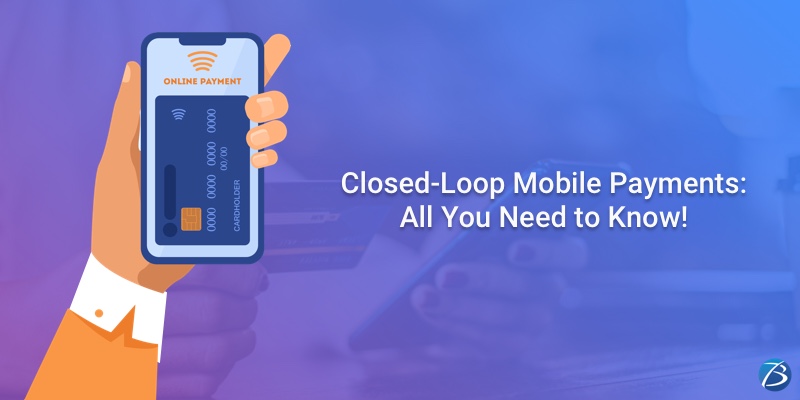
Closed-Loop Mobile Payments: All You Need to Know!

Executing payments via digital wallets/ Mobile payments solutions have become the order of the day owing to the emerging digital technologies and an increasing dependency on smartphones.

According to a research report published by the online portal, Mordor Intelligence, “The market value of mobile payment systems was 1449.56 Billion USD in the year 2020. The mobile wallet market is expected to grow at a CAGR of 24.5% during the next few years and the market value is predicted to reach 5399.6 Billion USD by the year 2026”.

Digital wallets have transformed the manner of making payments altogether. The two major categories under this type of payment methodology are open loop and closed loop mobile payments. The open-loop payment system involves using a single digital wallet via smartphones for making payments at several locations. Closed-loop mobile payments, on the other hand, requires prepaying a certain amount of money to one specific merchant or business brand just like using loyalty/gift cards at an apparel store or an eatery.

Out of these two mobile payment categories, the closed-loop approach is more preferable by merchants as well as consumers. In fact, the closed-loop payment model has revolutionized mobile payment one step further and elevated it to the next level! Let’s gather some quick insights on closed-loop mobile payments and the business benefits of adopting this approach.

What is Closed-Loop Mobile Payment?

A closed-loop payment refers to the payment transaction wherein a customer uploads money into a spending account linked to a payment device, just like the functioning of a gift card. This kind of payment happens between a spending account and a particular business brand. The mobile equivalent of this payment system is termed closed loop mobile payment. A closed-loop payment system uses mobile apps for managing gift cards and accounts via smartphone devices. Closed-loop mobile payment solutions allow users to check their balance within the system, make purchases using a mobile app instead of a physical card, and top up their account balance effortlessly. Customers can make payments using mobile devices/tablets to a specific retailer against an established account balance. Some of these solutions even provide the option of automatic balance top-up.

Any branded mobile payment or loyalty solution falls under this category. The TimmyMe app by Tim Hortons and the Starbucks smartphone app are popular examples of the closed-loop mobile payment model.

What is meant by a Closed-Loop Card?

A closed-loop card, also known as a single-purpose card, is an electronic payment card which the cardholder can use for executing purchases from a specific brand. Such cards usually bear the logo of the company where it can be used instead of bearing the logo of a primary payment processor such as American Express, MasterCard, Visa, etc.

Benefits of Closed-Loop Mobile Payments

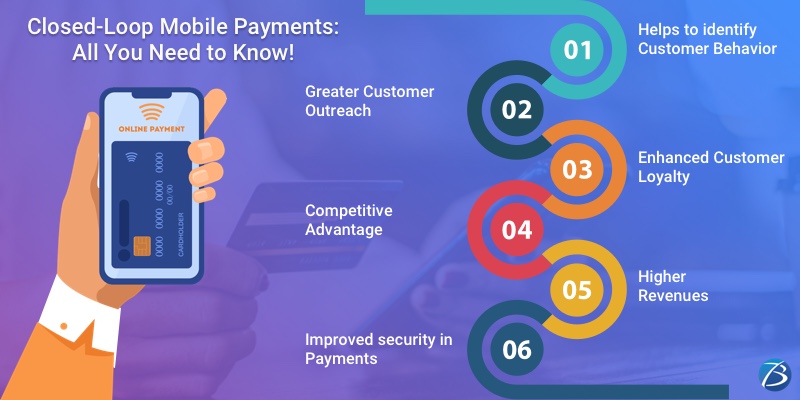
Identifying Customer Behavior for Creating Effective Marketing Campaigns

This mobile payment processing model helps entrepreneurs to capture big data based on millions of customer transactions and then, analyze this data for gaining deeper insights into the buying habits of consumers. Once, the businesses get a thorough understanding of their target market and identify the purchasing habits of their customers, they can create customized promotions/offers and deliver the same to customers’ mobile devices.

Greater Customer Outreach

Mobile technology simplifies sending out purchase reminders to customers via notifications. Moreover, businesses can even set up geo-targeted notifications which get triggered whenever potential consumers are close to their store. 

Enhanced Customer Loyalty

The ability to send customized promotional offers and loyalty incentives to customers via smartphone devices not only helps in retaining consumers but also enhances their loyalty quotient.

Competitive Advantage

Using the closed-loop mobile payment model, customers enjoy several benefits like smartphone friendliness, automatic balance top-up, the option of pre-ordering for avoiding line-ups, being able to consolidate several gift cards, and many more. This makes your brand the obvious choice for customers.

The exclusive nature of a closed-loop mobile payment system enables business brands to monopolize customers’ smartphone devices concerning services and products within their niche.

The aforementioned advantages help businesses gain a competitive edge over peers.

Higher Profits

When users add money to fund their mobile wallet apps or e-gift cards, it implies that they have technically spent money within your store. Furthermore, if customers fail to use up their remaining balance, you gain extra profit.

Why should Business Brands Adopt the Closed-Loop Mobile Payment Approach?

It’s high time businesses should adopt the closed-loop mobile payment strategy. Take a look at the reasons!

  • Billions of individuals across the globe own smartphones. As such, your targeted audience is more likely to possess a smartphone device than your firm’s gift/loyalty card. Besides, modern tech-savvy consumers are on the lookout for ways and means that will allow them to link their payment wallets with mobile devices. And, the closed-loop approach perfectly befits this requirement.
  • Consumers express interest in this system due to the bar code scanning abilities of modern mobile devices.
  • Such systems promise improved security. This is because they are not tied into carrier networks, users’ credit cards, or bank accounts, thereby adding an extra security layer between the merchant and the bank account.
  • Closed-loop mobile payments are less complicated and easy to execute.
  • This approach proves profitable for vendors as it involves lower purchase fees in comparison to direct credit card transactions.

Concluding Thoughts:

A closed-loop mobile payment system proves profitable for the merchant as well as their consumers. Therefore, if you possess the necessary resources, commence the mobile app development process by partnering with reliable developers and a merchant service provider for architecting an impeccable closed-loop payment system.

Are you on the lookout for a dependable software firm for building a closed-loop mobile payment system for your business? Contact Biz4Solutions, a renowned Offshore Software Development Company in India, with 10+ years of experience in serving global clientele!

To know more about our core technologies, refer to links below:

RoR App Development Company

Java Development Company

Flutter App Development Company

Monday, September 20, 2021

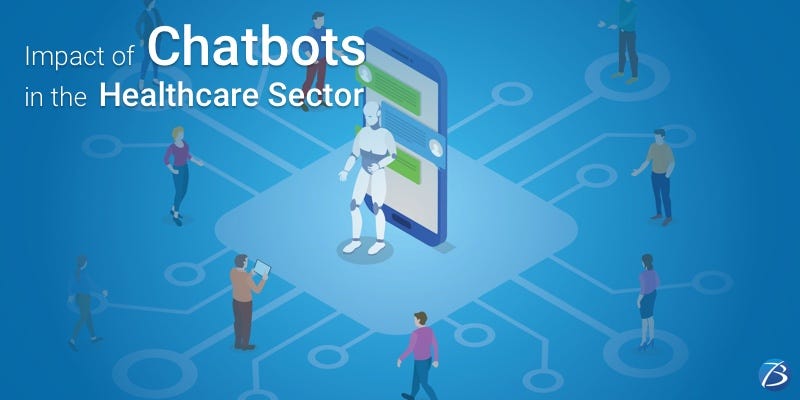
A Short Guide on How Chatbots are Influencing the Healthcare Sector!

According to the market forecast of AIMultiple, an emerging portal that performs transparent and data-driven research on technologies like AI, IoT, RPA, etc., the AI and chatbot industry is booming. Their reports depict the following estimations:

  • Chatbots save about $0.70 per interaction
  • The global chatbot market may reach $1.3 Billion by the year 2025
  • Almost 50% of large-scale companies are thinking of investing in the chatbots

It is evident from these numbers that machine learning and AI-based chatbots are becoming a new craze in the industrial world.

The healthcare sector too has leveraged this technology. In 2021, the healthcare chatbots have proved all the more beneficial as remote patient treatment was in high demand due to the Covid-19 pandemic. So, needless to say, this breakthrough technology is going to transform the healthcare sector in myriad ways.

Vital Role of Smart Chatbots in Healthcare Solutions and Services

So, what exactly is a chatbot? Well, it is a kind of web-robotic application that runs on machine learning algorithms; which fall under artificial intelligence. A chatbot possesses human-like conversational skills and is designed to run automated commands while interacting online.

In the healthcare industry, these super-responsive AI-enabled chatbots are mostly used as a conversationalist or a healthcare consultant for providing accurate information instantly. They facilitate seamless interactions between patients and doctors or other care providers. A few top-notch examples of healthcare bots are Sensely, Babylon, ABBI, SafeDrugBot, Ada, Florence, etc.

Furthermore, these bots can enhance the accuracy of ailment identification and symptom detection, and also help to assist in preventive care, feedback processes, post-recovery guidance, etc. They help to perform mundane tasks like sending emails, providing simple solutions, lead generation, marketing, result analysis, etc. So, as these chatbots can handle simple tasks, the healthcare staff and medical professionals can focus on more important tasks. Owing to this, healthcare app development agencies across the globe have gradually started to architect innovative and smart chatbots.

Major Categories of Healthcare Chatbots in the Market

Information-Oriented Bots

These bots aim towards answering the queries of the patient by providing apt information and keeping the conversations simple, creative and non-repetitive.

Task-Oriented Bots

These bots are meant to guide the health workers in providing virtual health check-ups to the patients and also schedule timely appointments.

Open/Close Domain Bots

As the name suggests, these are domain-specific bots that provide detailed data of the diseases, their symptoms, and related health issues to the patients.

These were major categories in which the bots are divided. Based on these, there are diverse bots designed in the market, such as healthcare appointment selector bots, bots for patient treatment feedback, bots for dental clinics, bots providing coupon promotions for therapists, bots providing sex education, fitness assistance bots, health insurance bots, and FAQ chatbots.

Practical Benefits of AI Chatbots in the Healthcare Sector

Answering FAQs and Providing Relevant Information

Usually, most of the patients keep asking the same repeated and basic questions to the healthcare facilities on their websites or applications. In this case, intelligent chatbots can prove extremely beneficial. Bots have aptly programmed responses and they address the frequently asked questions instantly with much accurate information, even though the questions are related to a wide range of health conditions.

Customer Service for Enhanced Patient Engagement

Bots act as a tool that facilitates instant and continuous interaction with patients. This can drastically improve patient satisfaction as well as retention. The concerns of patients are resolved immediately which boosts engagement and builds trust in them.

Scheduling Appointments

Bots can help the patients to book appointments easily and also assign a particular doctor to them. They can send a confirmation email to the doctor and book an available slot as per the availability of both parties. This way scheduling online appointments becomes an effortless task with bots.

Primary Patient Care and Assistance

Nowadays, any type of information is just a click away. But the drawback of this facility is that people can easily get access to misleading or incorrect health information. This may lead to severe health conditions too. However, carefully designed chatbots can be utilized to provide the right information when it comes to primary patient care and also emergency first aid.

Detection of Symptoms and Ailment

A chatbot helps in the detection of ailments that patients have by asking some simple questions related to the ailments and analyzing the patient’s health history. Thus, patients can use bots for identifying certain ailments and measure the severity of their health conditions using bots.

Claims and Coverage

In case the patients want to file for claims, the bot can check their existing coverage, track the status of a claim, it will easily provide them the relevant information they require. Besides, doctors too get seamless access to patient data and their queries. So they can proactively authorize billing payments and related requests that patients or healthcare authorities may ask.

Latest updates about the Drugs to Medical professionals

There are high chances that medical professionals can miss out on information of the latest drugs or researches made. These updates can be crucial for treating patients. In this case, bots can be used for dispensing the right and updated information of the drugs to those medical professionals.

Research and Suggestive Treatment

Chatbots can be highly beneficial when it comes to research and suggestive treatment. They have already made some contributions in areas like telemedicine, health records, radiology, imaging, etc.

Concluding Words:

Gradually, AI chatbots are becoming a new normal in the healthcare domain. They are not only flawlessly communicating with the patients or the end-users but also digitalizing a host of other functionalities in the healthcare organizations. These chatbots are highly intelligent and with some human assistance, they can empower several small and large healthcare centers to operate seamlessly and improvise their functioning to a great extent. No wonder why every existing healthcare app development company is on the verge of designing smart chatbots to meet the expectations of this highly competitive market.

Hopefully, this blog has given you insights into how healthcare chatbots have influenced the healthcare industry.

Do comment below or get in touch, for any further details on this topic.

To know more about our core technologies, refer to links below:
Flutter App Development

PHP App Development

Node.js App Development